 INFRA
INFRA
INFRA
INFRA







INFRA

Does any company know exactly what they’re doing with data they’ve collected, from transactions to employee logs? While businesses want to monetize data, lawmakers demand that it comply with Europe’s latest General Data Protection Regulation. And the pros and cons of public cloud computing versus the more tightly contained on-premises storage can be tough to sort out. Maybe that is why some companies opt for computing infrastructure that keeps options open.
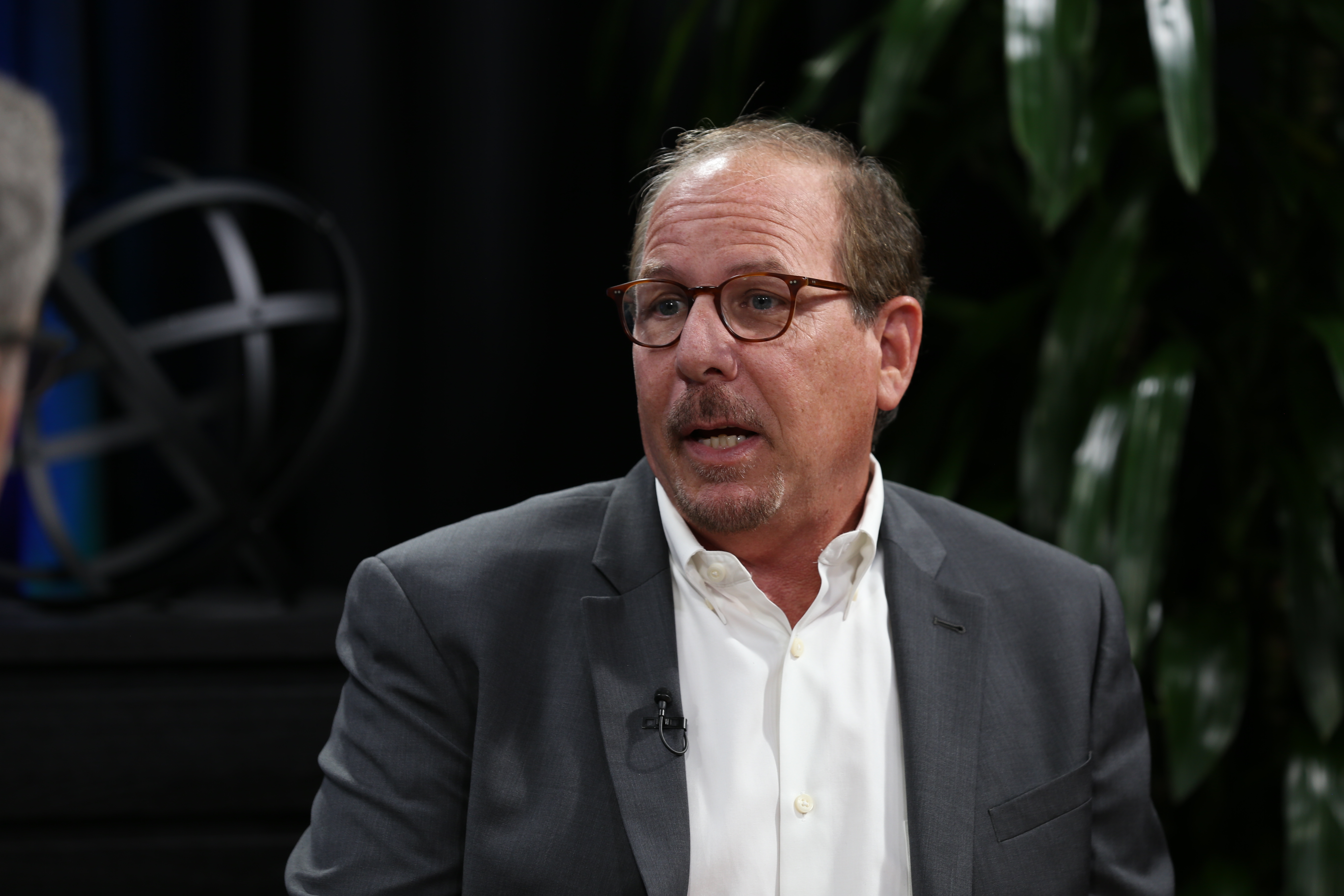
Companies may not have a solid gold data monetization strategy yet, but they fervently hope for one eventually, according to Eric Seidman (pictured), director of product/solutions marketing at Veritas Technologies LLC. Some must retain data for litigation requirements and the like.
“But more and more we’re also seeing the growth of this type of data just for the use of mining it and getting more value out of it,” Seidman said.
Retaining massive data on-premises can be an inexpensive alternative to cloud storage, but many companies want to run workloads in the public cloud for various reasons. For flexibility, they need solutions that allow them to keep one foot on-prem, the other in a cloud and perhaps a hand in yet another cloud, Seidman explained.
Seidman spoke with Jeff Frick (@JeffFrick), host of theCUBE, SiliconANGLE Media’s mobile livestreaming studio, at theCUBE’s studio in Palo Alto, California. (* Disclosure below.)
Serving fickle customers with a hankering after cloud agility requires fancy footwork from a company still selling appliances. Everything Veritas brings out is software-defined first, Seidman pointed out. Veritas’ Access appliance, which complements its existing data protection solutions, has a separate software license.
“If we come out with a new type of storage appliance, they’re free to move that license to it. Or if they choose to even move to a third-party hardware, the newer, greener, cheaper pasture storage server, they can transfer that,” Seidman stated.
Additionally, Veritas’ Flex appliance leverages containers (a virtualized method for running distributed applications) and can turn on or off cloud-tiering as a service. “So customers may have a requirement for multiple NetBackup domains, and in the future they want a tier to [Microsoft Corp.] Azure or another public cloud, they can simply turn on that cloud-tiering service in this Flex appliance,” Seidman concluded.
Watch the entire video interview below, and be sure to check out more of SiliconANGLE’s and theCUBE’s CUBE Conversations.
Support our mission to keep content open and free by engaging with theCUBE community. Join theCUBE’s Alumni Trust Network, where technology leaders connect, share intelligence and create opportunities.
Founded by tech visionaries John Furrier and Dave Vellante, SiliconANGLE Media has built a dynamic ecosystem of industry-leading digital media brands that reach 15+ million elite tech professionals. Our new proprietary theCUBE AI Video Cloud is breaking ground in audience interaction, leveraging theCUBEai.com neural network to help technology companies make data-driven decisions and stay at the forefront of industry conversations.





