 CLOUD
CLOUD
CLOUD
CLOUD







CLOUD

Cloud infrastructure and services are more popular than ever — but are they any easier to get a handle on? The Amazon Web Services Inc. Marketplace now has more than 4,000 listings for customers to sift through. And let’s not get started on managing workloads across multiple clouds. Can anyone reign all this complexity with a human-friendly control pane or interface?
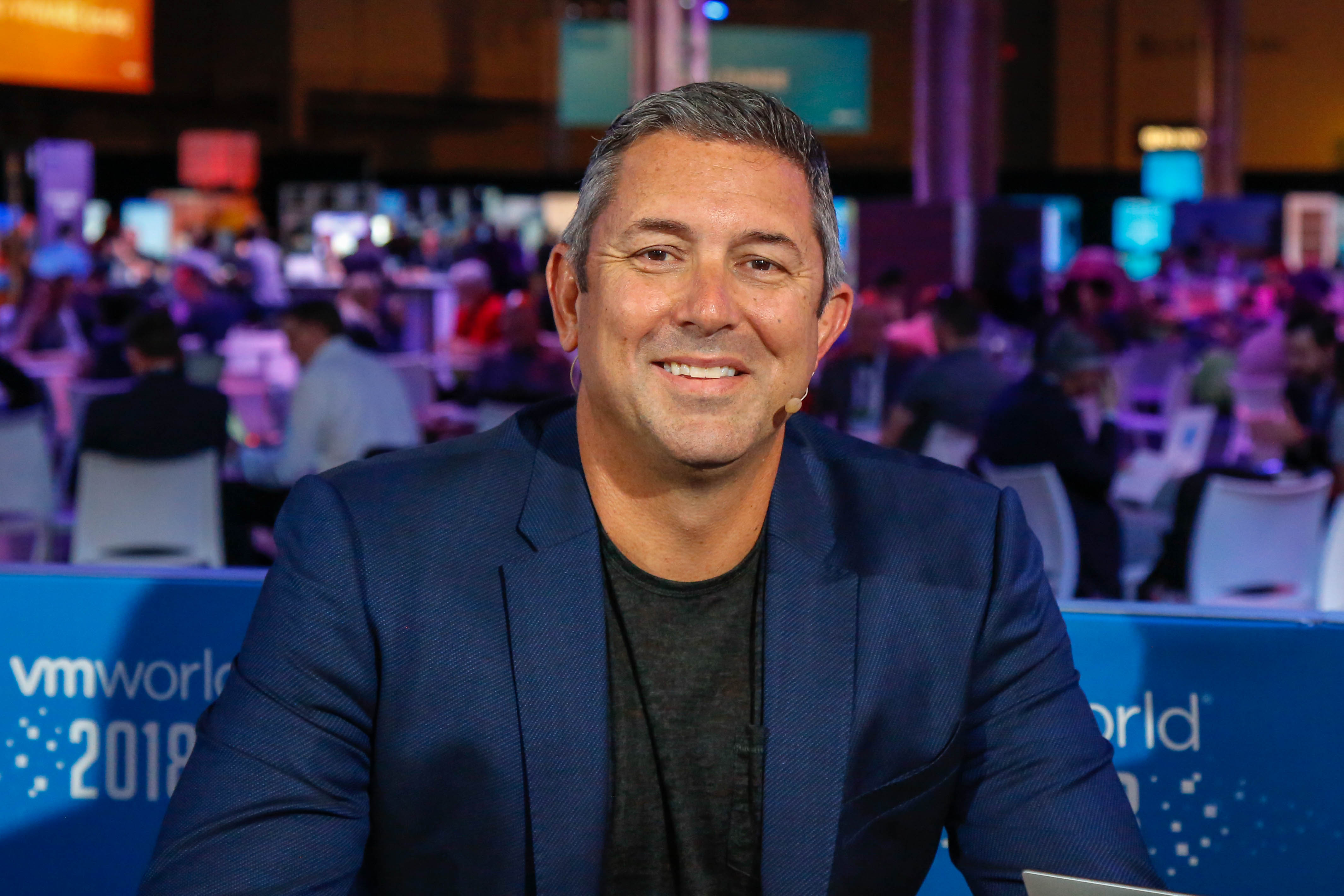
“There’s just a real dire need for more ease of management that’s unified across these different increasingly complex environments,” said Ben Gibson (pictured), chief marketing officer of Nutanix Inc.
Gibson spoke with Stu Miniman (@stu), co-host of theCUBE, SiliconANGLE Media’s mobile livestreaming studio, and Alan Cohen (@ascohen), guest host and industry executive, during the VMworld conference in Las Vegas, Nevada. They discussed multicloud kinks and Nutanix’s trek up the stack. (* Disclosure below.)
The vast majority of companies — about 92 percent, according to Gibson — have adopted hybrid infrastructure or plan to do so. Hybrid or multicloud management is proving to be bumpy terrain for the many companies gunning for the market. Nutanix is working to position itself as the ease-of-use go-to guys in multicloud, Gibson pointed out. The company learned a thing or two about collapsing layers of stuff with hyperconverged infrastructure, and it wants to bring those lessons to the running of applications across environments.
Nutanix, VMware, Dell EMC and Hewlett Packard Enterprise lead the on-premises cloud market. Nutanix wants customers to see its on-prem software as a control pane for managing workloads across the cloud universe. It wants to make underlying cloud infrastructure melt out of sight for end users.
“The whole notion of hyperconverged — it was really about how do you make a lot of that go away or be invisible? But then you take that same concept and move that forward now,” Gibson said.
The company has integrated the Calm.io application management platform into its software to surface up application whereabouts to a single pane of glass. And its new product Beam is a multicloud optimization service.
“The idea is how to bring context and visibility into your cloud uses and your cloud spend and how do you get smarter about leveraging the right cloud platform,” Gibson stated.
The company doesn’t want to be the biggest cloud company in the world, but it wants to be the one to quiet the gripes and groans about multicloud management with consumer-grade simplicity and choice. “The only thing we want to own is, I’d say, the mantle of being one of the easiest to use,” Gibson concluded.
Watch the complete video interview below, and be sure to check out more of SiliconANGLE’s and theCUBE’s coverage of the VMworld conference. (* Disclosure: Nutanix Inc. sponsored this segment of theCUBE. Neither Nutanix nor other sponsors have editorial control over content on theCUBE or SiliconANGLE.)
Support our mission to keep content open and free by engaging with theCUBE community. Join theCUBE’s Alumni Trust Network, where technology leaders connect, share intelligence and create opportunities.
Founded by tech visionaries John Furrier and Dave Vellante, SiliconANGLE Media has built a dynamic ecosystem of industry-leading digital media brands that reach 15+ million elite tech professionals. Our new proprietary theCUBE AI Video Cloud is breaking ground in audience interaction, leveraging theCUBEai.com neural network to help technology companies make data-driven decisions and stay at the forefront of industry conversations.





