 INFRA
INFRA
INFRA
INFRA







INFRA

Trigger warning: Robots and automation may indeed do some jobs better than the human reading this. But, take heart, they tend to be the rote, repetitive tasks that no one wants to do anyway. It could spell job loss for workers but also open a new vista of productivity. Two consulting pros recently weighed in on where real enterprises are right now on the road to industry 4.0, the workplace of the future where automation makes humans way more efficient and creative.
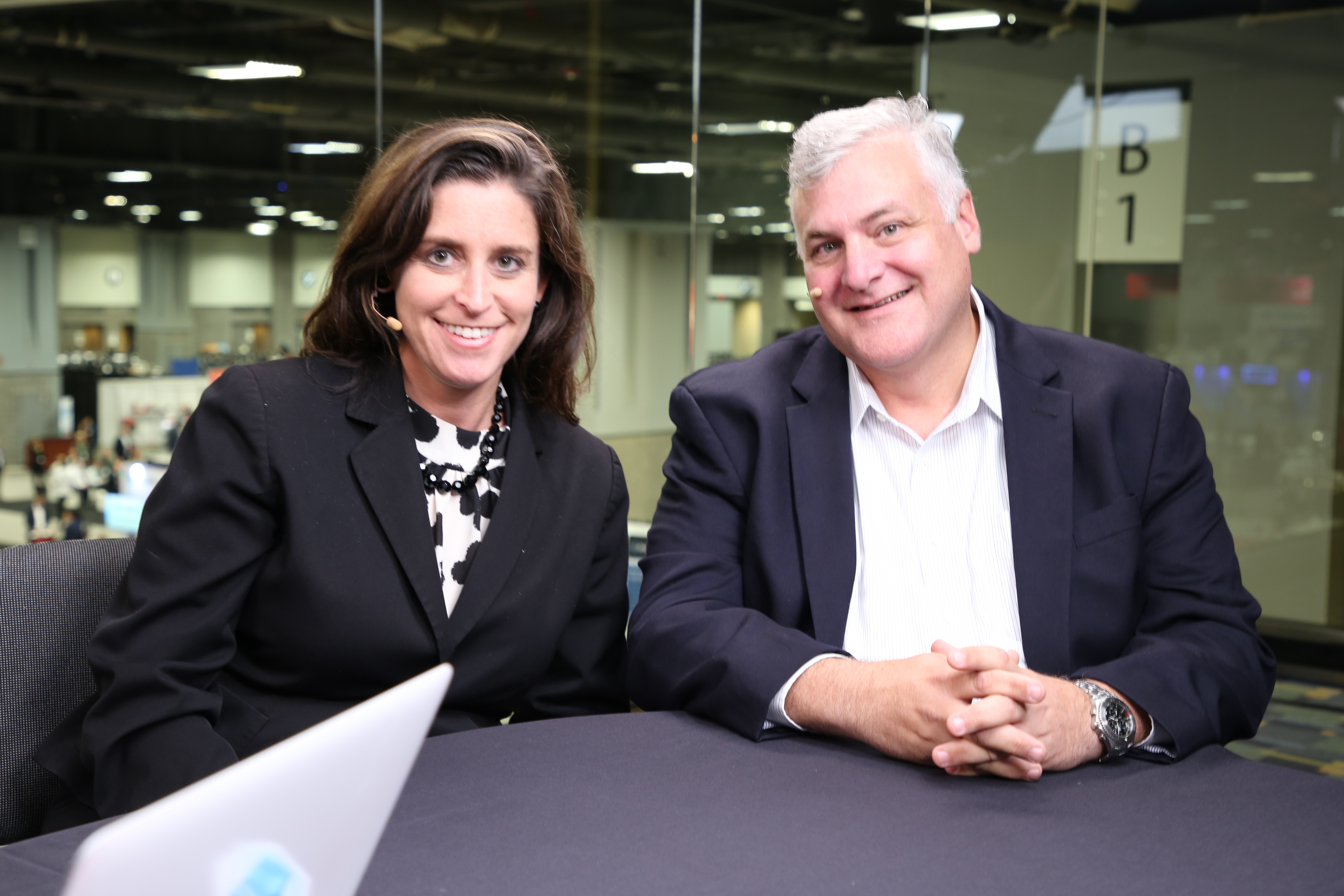
“We’re getting closer, I would think, and people are definitely piloting to get there,” said Rachel Myers (pictured, left), principal of Capgemini Services SAS.
Capgemini is trying to push them along with some practical plans that look farther out beyond shot-in-the-dark pilots, Myers added. The idea is to implement technologies not just because they’re neat, but because they bring real return on investment. For example, clients are making tangible gains today through robotics process automation, she explained.
Myers and John Clark (pictured, right), vice president at Capgemini, spoke with Dave Vellante (@dvellante) and John Walls (@JohnWalls21), co-hosts of theCUBE, SiliconANGLE Media’s mobile livestreaming studio, during the Inforum event in Washington, D.C. They discussed how Capgemini is helping clients implement automation tech to transform their work processes and be more profitable. (* Disclosure below.)
Companies should draw up a road map of where they want to be, say, three to five years down the road and prioritize against it, according to Myers. This means deciding what is going to bring the biggest benefits first in their particular organizations “so that it’s not just haphazardly trying out these technology enablers like RPA and AI. It is a clear vision and strategy of where we’re trying to go and slowly hitting some of that ROI and seeing value,” she stated.
This can be deeply individual for different companies, which is why Capgemini collaborates last-mile solutions with Infor Inc., according to Clark. Both companies focus on vertical-specific functionality lately. “And we’ll build out that solution and take that to market,” he said.
As for questions about how automation impacts employment and outsourcing, all of the answers aren’t available yet, Clark pointed out. But … “We are seeing the economic calculation change a bit from the point of ‘just go offshore for labor,'” he added.
With labor reduced, outsourcing to reduce labor expenditures is not as obvious a choice, Clark concluded.
Watch the complete video interview below, and be sure to check out more of SiliconANGLE’s and theCUBE’s coverage of the Inforum event. (* Disclosure: TheCUBE is a paid media partner for Inforum 2018. Neither Infor Inc., the event sponsor, nor other sponsors have editorial control over content on theCUBE or SiliconANGLE.)
Support our mission to keep content open and free by engaging with theCUBE community. Join theCUBE’s Alumni Trust Network, where technology leaders connect, share intelligence and create opportunities.
Founded by tech visionaries John Furrier and Dave Vellante, SiliconANGLE Media has built a dynamic ecosystem of industry-leading digital media brands that reach 15+ million elite tech professionals. Our new proprietary theCUBE AI Video Cloud is breaking ground in audience interaction, leveraging theCUBEai.com neural network to help technology companies make data-driven decisions and stay at the forefront of industry conversations.





