 EMERGING TECH
EMERGING TECH
EMERGING TECH







EMERGING TECH

Global professional services firm Ernst & Young Global Ltd has become one of the leading users of robotic process automation, or RPA, technology, and that’s not by accident. The company has embarked on a deliberate strategy, in cooperation with UiPath Inc., to use more than 1,000 robots in support of the firm’s internal processes so it can fully understand what solutions can be confidently recommended to clients.
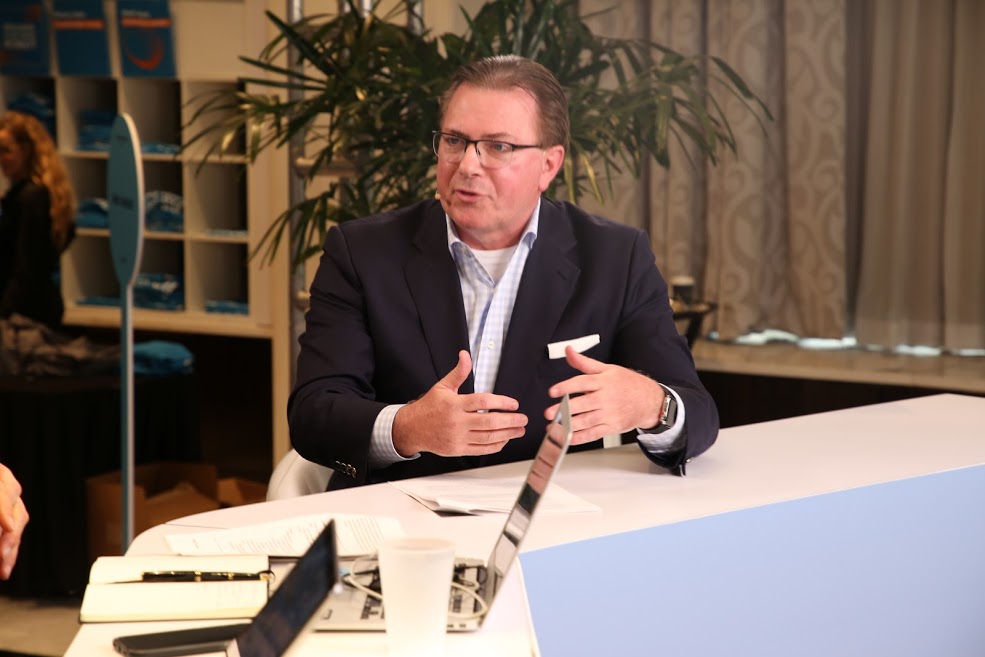
“Today, we’re one of the largest users of RPA, as well as chatbots, machine learning, and natural language processing,” said Jeff Aldridge (pictured), advisory partner/principal and U.S. automation leader at EY. “We think we’ve saved 2 million hours per year out of our own back office. We took those learnings at scale and have started applying those to clients.”
Aldridge spoke with Dave Vellante (@dvellante) and Stu Miniman (@stu), co-hosts of theCUBE, SiliconANGLE Media’s mobile livestreaming studio, during the UiPathForward Americas event in Miami Beach, Florida. They discussed the importance of having a clear purpose for RPA implementation and what EY anticipates for future use and adoption over the next two years. (* Disclosure below.)
EY’s experience in applying RPA in-house has given it insight into the kinds of headwinds client organizations face when considering an automation solution. The biggest obstacle can be fully understanding the purpose, according to Aldridge.
“Is it about headcount reduction, ability to scale, accuracy?” Aldridge asked. “Once they have that purpose and see what the potential is then I think it starts to pick up speed.”
Accelerated RPA adoption in the enterprise is a trend that may well play out over the next two years, based on what EY is seeing among its customers. A key driver of demand may be interest in front-end applications as well.
Clients to date have bought a few licenses and conducted exploratory RPA pilots, but that may be about to change. “We do think that’s going to change dramatically in the next 12 to 24 months based on what we’re seeing in the market,” Aldridge said. “I think you’re going to see a lot more front-office applications that are going to drive revenue as opposed to just reducing cost.”
Watch the complete video interview below, and be sure to check out more of SiliconANGLE’s and theCUBE’s coverage of the UiPathForward Americas event. (* Disclosure: TheCUBE is a paid media partner for UiPathForward Americas. Neither UiPath Inc, the event sponsor, nor other sponsors have editorial control over content on theCUBE or SiliconANGLE.)
Support our mission to keep content open and free by engaging with theCUBE community. Join theCUBE’s Alumni Trust Network, where technology leaders connect, share intelligence and create opportunities.
Founded by tech visionaries John Furrier and Dave Vellante, SiliconANGLE Media has built a dynamic ecosystem of industry-leading digital media brands that reach 15+ million elite tech professionals. Our new proprietary theCUBE AI Video Cloud is breaking ground in audience interaction, leveraging theCUBEai.com neural network to help technology companies make data-driven decisions and stay at the forefront of industry conversations.





