 EMERGING TECH
EMERGING TECH
EMERGING TECH






EMERGING TECH

Google LLC today officially pulled back the curtains on the hotly anticipated Pixel 3 and Pixel 3 XL smartphones, along with a new premium tablet and a voice-activated smart display distinguished from rivals by its lack of a camera.
The products debuted at the company’s Made by Google Event event today in New York. The launch follows months of leaks that had already given away quite a few details about the new devices, but the announcements still packed enough punch to draw much of the tech industry’s attention.
The main difference between the two latest additions to Google’s smartphone lineup is their screen size. The Pixel 3 has a 5.5-inch display while the Pixel 3 XL boasts a 6.3-inch screen, an increase of 0.5 and 0.3 inches over the previous models, respectively. Situated above the latter model’s panel is an iPhone-style notch that accommodates the front-facing cameras — yes, two of them.
Google has decided to equip the front of the Pixel 3 and 3 XL with not just the usual one but two 8-megapixel cameras. One of them features a wide-angle lens geared toward group photos and other situations in which the user might want to capture more of the background than usual. On the back is a more powerful 12.2-megapixel camera.
https://www.youtube.com/watch?v=vKSA_idPZkc
Taking photos will be a much different experience than on previous Pixel models thanks to new artificial intelligence features. One, Top Shot, can take multiple pictures in quick succession and then pick out the best ones. The AI algorithms behind the scenes prioritize photos in which people smile while discarding those made while they were blinking or looking away.
Another feature dubbed Super Res Zoom uses machine learning to enhance pictures of faraway objects. And a third capability, which Google promised to release in an update later this year, will enable users to take more natural-looking photos at night by removing the need to use the flash.
Some of the other AI capabilities go beyond photography. The Pixel 3 and Pixel 3 XL run the Google Lens image analysis service locally, allowing users to identify objects such as items in a display window, while a feature dubbed Screen Call uses Google Assistant to filter calls automatically.
The internals impress as well. The phones sport Qualcomm Inc.’s top-of-the-line Snapdragon 845 processor and 4 gigabytes of memory, plus speakers described as nearly 40 percent louder than previous ones.
The Pixel 3 will ship from $799 while the Pixel 3 XL will have a starting price of $899. They’ll come in both 64- and 128-gigabyte models, with the latter edition set to be priced $100 higher.
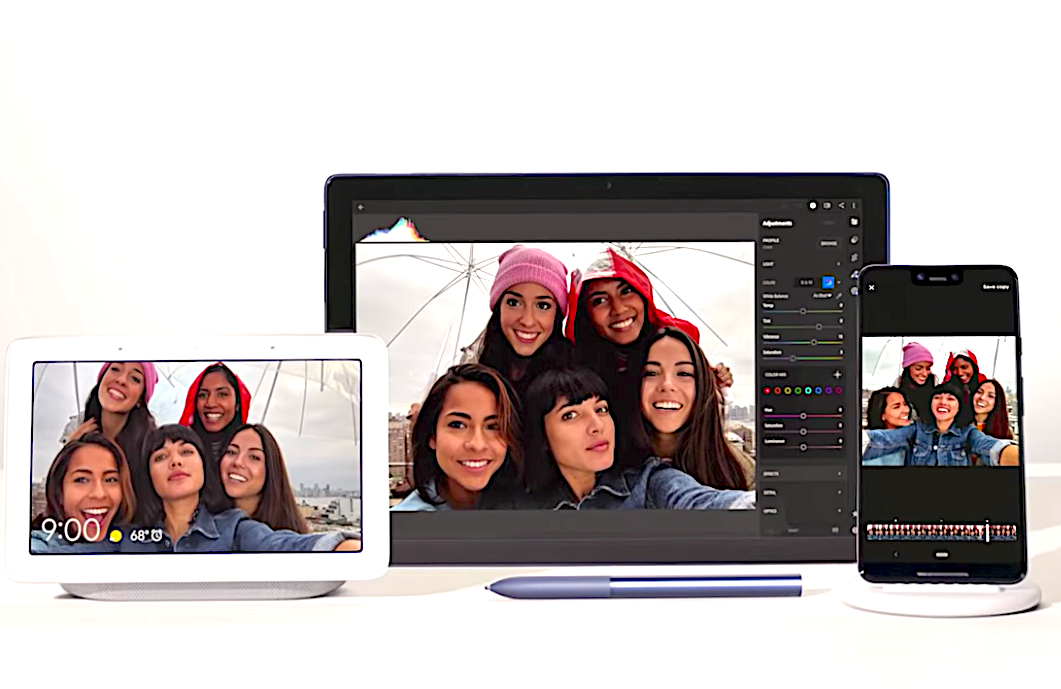
The phones made their debut alongside the Pixel Slate, a new Chrome OS tablet with a 12.3-inch display. The screen is based on a type of LCD, rather than the newer OLED technology in Pixel phones, yet has a 2000-by-3000-pixel resolution touted as sharper than any other 12-inch tablet on the market. Google further claims that the display is power-efficient enough for the device to last up to 12 hours on a single charge.
Under the hood, the Pixel Slate will offer a choice of or Core M3, i5 or i7 processors from Intel Corp. along with up to 16 gigabytes of memory and as much as 256 gigabytes of storage. Prices range from $599 to $1,599 depending on the model.

Users with an extra $200 to spend can throw in Google’s new homegrown detachable keyboard. The accessory attaches to the bottom of the Pixel Slate via a magnetic connector, props it up to provide a laptoplike experience and features backlit keys.
The final star from today’s event is the introduction of the Home Hub. It’s a smart display powered by Google Assistant that will take on competing products from Amazon.com Inc. and Facebook Inc., which launched its Portal entry into the market only yesterday.
Unlike rival systems, the Home Hub doesn’t feature a camera. That rules out using the device for video calling but could make it more appealing to privacy-conscious consumers who may not be comfortable with the idea of a cloud-connected lens sitting in their homes.
Users can an interact with the Home Hub using voice commands and via its seven-inch touch screen. The display automatically adjusts brightness levels based on the light conditions in a room and provides access to software that makes it possible to control other smart devices. That comes on top of support for key Google services such as YouTube, which the company has not made available on Amazon’s Echo Show smart display.

The Home Hub will go on sale for $149. It will become available alongside a $79 wireless charging stand for the new Pixel phones that offers a few of the same software features, most notably the ability to turn the display into a live photo frame.
Support our mission to keep content open and free by engaging with theCUBE community. Join theCUBE’s Alumni Trust Network, where technology leaders connect, share intelligence and create opportunities.
Founded by tech visionaries John Furrier and Dave Vellante, SiliconANGLE Media has built a dynamic ecosystem of industry-leading digital media brands that reach 15+ million elite tech professionals. Our new proprietary theCUBE AI Video Cloud is breaking ground in audience interaction, leveraging theCUBEai.com neural network to help technology companies make data-driven decisions and stay at the forefront of industry conversations.





