 AI
AI
AI
AI







AI

We keep hearing that autonomous cars are going to take over the roads any day now. Yet, how many of us can see ourselves driving hands-free down a city street at rush hour, bumper-to-bumper with other drivers paying no attention to what’s happening around them? We asked some pros in next-gen automotive to explain the different levels of autonomy and what we can actually expect in the near term.
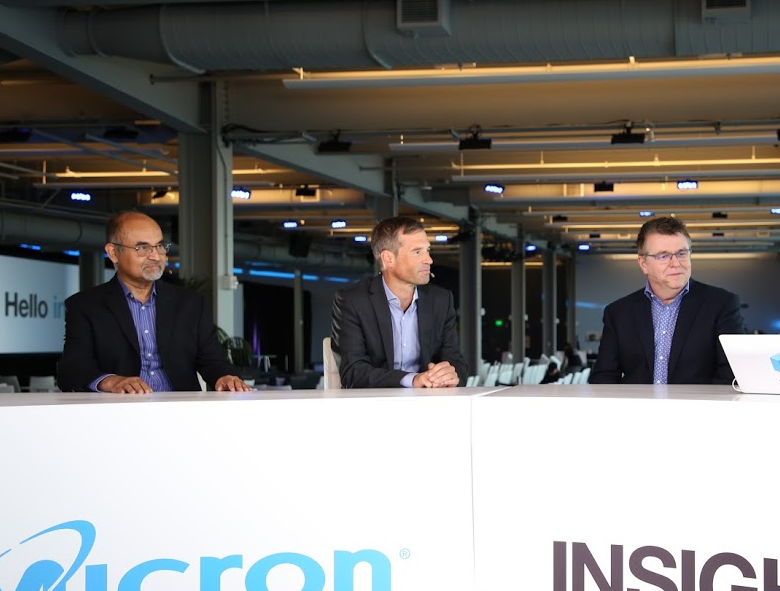
There are actually five levels of autonomous driving with level one being light assistance and level five being fully hands-and-feet-free. “We actually believe that the level two through four … the market would be ready for that essentially in the shorter term, whereas the level five will take a little while to get there,” said Vijay Nadkarni (pictured, left), vice president of artificial intelligence at Visteon Corp.
There are lots of tricks AI can do for drivers in those intermediate levels; it’s not all about being able to text and drink an iced matcha at the same time.
Nadkarni; Simon Euringer (pictured, center), head of BMW Group’s Technology Office; and Jeff Bader (pictured, right), vice president and general manager of the Embedded business unit at Micron Technology Inc., spoke with Dave Vellante (@dvellante), host of theCUBE, SiliconANGLE Media’s mobile livestreaming studio, during the Micron Insight event in San Francisco. They discussed the state of automotive driving and what AI can do for drivers before it makes their hands obsolete. (* Disclosure below.)
Let’s be honest, do drivers really need AI to tell them to foot the brake when a stag is crossing the road? They don’t. But there are other, more practical, uses for AI en route, according to Euringer.
“Predicting the best driving strategy for your 20-mile ride on the highway — this is where AI is really beneficial,” Euringer said.
Integrating AI through voice assistants and infotainment can also transform the driving experience, he added. BMW is building in its own voice assistant to work in tandem with the various assistants people use.
“You might be an Alexa user, rather than a Google Assistant user, and you would have that expectation to be able to ask to chat with your Alexa and your car as well,” Euringer stated.
It is unclear how many people in the coming years will want their own vehicles — autonomous or not — with so many glued to ride-sharing apps now.
“Getting my 17-year-old to get his permit was like kicking a bird out of the nest,” Bader said. “There’s a large generational group growing up right now that doesn’t necessarily see it as a necessity.”
Watch the complete video interview below, and be sure to check out more of SiliconANGLE’s and theCUBE’s coverage of Micron Insight 2018. (* Disclosure: TheCUBE is a paid media partner for the Micron Insight event. Neither Micron Technology Inc., the event sponsor, nor other sponsors have editorial control over content on theCUBE or SiliconANGLE.)
Support our mission to keep content open and free by engaging with theCUBE community. Join theCUBE’s Alumni Trust Network, where technology leaders connect, share intelligence and create opportunities.
Founded by tech visionaries John Furrier and Dave Vellante, SiliconANGLE Media has built a dynamic ecosystem of industry-leading digital media brands that reach 15+ million elite tech professionals. Our new proprietary theCUBE AI Video Cloud is breaking ground in audience interaction, leveraging theCUBEai.com neural network to help technology companies make data-driven decisions and stay at the forefront of industry conversations.





