



 EMERGING TECH
EMERGING TECH
EMERGING TECH
EMERGING TECH

Developing self-driving cars is hard. That’s the main takeaway from the news today that General Motors Co. is the latest company to stumble in autonomous vehicle efforts.
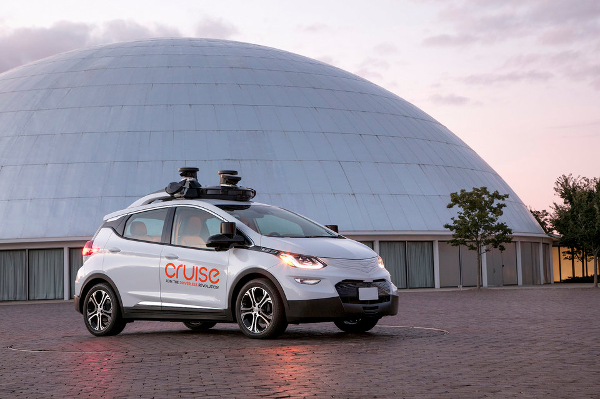
According to Reuters, cars developed by GM’s Cruise unit, which first started on-street testing in 2016, are facing “some unexpected technical challenges,” including difficulty in “identifying whether objects are in motion.” Examples include the vehicles hesitating and stopping while passing rows of parked motorcycles or bicycles and sometimes failing to detect pedestrians.
Referencing a cast of current and former GM and Cruise employees, the report noted that GM’s previously stated goal of deploying a self-driving taxi service in 2019 may be in doubt as not one part of the development roadmap is currently on schedule.
GM Chief Executive Officer Kyle Vogt said that “early in development I’m sure there were phases where we were putting systems together where they didn’t meet the requirements we needed for launch, and that’s part of the testing and development process.” He added that the issues would be resolved before the vehicles hit the streets.
The company has been highly ambitious in its autonomous vehicle plans, announcing in January that it intends to start manufacturing vehicles without a steering wheel or pedals starting next year. Its quest to deliver self-driving cars is well-financed, with SoftBank Group Corp. and Honda Motor Co. Ltd. having invested $2.25 billion and $2.75 billion, respectively, into GM Cruise to assist in the development of the technology.
GM Cruise is not the first company to have problems developing self-driving car technology and it won’t be the last. A report in August claimed that autonomous vehicles from Waymo LLC that have been in a ride-hailing trial in Phoenix, Arizona, since November have problems turning around corners. In that case, the technology was said to be struggling to predict human nature.
More infamously, autonomous vehicles from both Tesla Inc. and Uber Technologies Inc. have killed passengers and pedestrians alike.
… We’d like to tell you about our mission and how you can help us fulfill it. SiliconANGLE Media Inc.’s business model is based on the intrinsic value of the content, not advertising. Unlike many online publications, we don’t have a paywall or run banner advertising, because we want to keep our journalism open, without influence or the need to chase traffic.The journalism, reporting and commentary on SiliconANGLE — along with live, unscripted video from our Silicon Valley studio and globe-trotting video teams at theCUBE — take a lot of hard work, time and money. Keeping the quality high requires the support of sponsors who are aligned with our vision of ad-free journalism content.
If you like the reporting, video interviews and other ad-free content here, please take a moment to check out a sample of the video content supported by our sponsors, tweet your support, and keep coming back to SiliconANGLE.






