 INFRA
INFRA
INFRA
INFRA







INFRA

Security is the bottleneck slowing the growth of the internet of things. An ever-changing landscape, the complexity of IoT devices and a shortage of cybersecurity specialists have left businesses in a state of solution confusion.
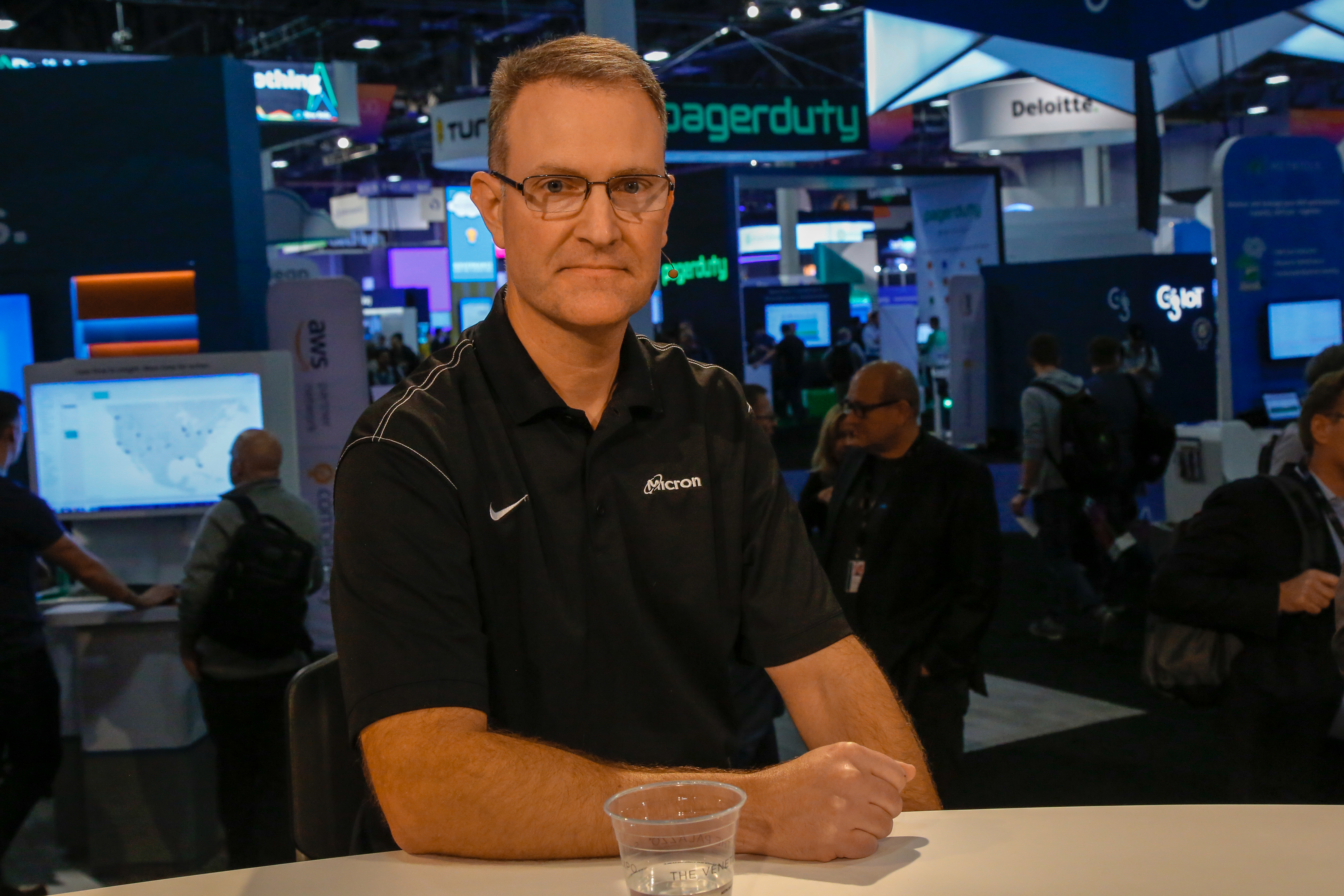
“Security has become one of the most dominating factors holding back any growth in IoT,” said Jeff Shiner (pictured), marketing director of IoT solutions at Micron Technology Inc.
Shiner spoke with John Walls (@JohnWalls21), co-host of theCUBE, SiliconANGLE Media’s mobile livestreaming studio, and guest host Justin Warren (@jpwarren), chief analyst at PivotNine Pty Ltd; during AWS re:Invent in Las Vegas. They discussed Micron’s solutions for IoT cybersecurity. (* Disclosure below.)
Micron is a global semiconductor company, with its standard flash memory already an integral and trusted part of systems across the commercial world. This makes flash the obvious foundation for a unified security solution, according to Shiner.
“It comes back down to the fact that flash is so pervasive,” he said. “It’s your [basic input/output system] in servers in laptop;, it’s in medical devices and factory automation devices; it’s all over your car. So if you have a footprint that can be unified first and foremost, you’re making it easier on everybody.”
A recent addition to Micron’s non-volatile security offerings is the MT25Q NOR flash with embedded Authenta Technology. Embedding security in the silicon level of flash means security from cloud to edge. Connected IoT devices with the Authenta technology continually verify security status — starting from boot — and authenticate in order to get privileges, protecting both the device and any software that runs on it.
“When these become end-to-end plug-and-play with a pervasive security element, then you can have a simplified security story,” Shiner stated.
If silicon verification can really break the security bottleneck, it will open up the IoT to rapid expansion and offer new monetization opportunities across the board. Shiner believes in an open marketplace, with partnership the preferred business model and even traditional competitors working together in a unified approach.
“You don’t pick proprietary approaches that are going to benefit only one vendor. If you do it that way, you’re not going to have success,” Shiner stated. He believes adopting a standardized approach to security will benefit everyone.
“It will accelerate time to market and it’ll also save our customers a ton of money. Then you get to start talking about how users can do new things. … It becomes a very much a win-win story,” he concluded.
Watch the complete video interview below, and be sure to check out more of SiliconANGLE’s and theCUBE’s coverage of AWS re:Invent. (* Disclosure: Micron Technology Inc. sponsored this segment of theCUBE. Neither Micron nor other sponsors have editorial control over content on theCUBE or SiliconANGLE.)
Support our mission to keep content open and free by engaging with theCUBE community. Join theCUBE’s Alumni Trust Network, where technology leaders connect, share intelligence and create opportunities.
Founded by tech visionaries John Furrier and Dave Vellante, SiliconANGLE Media has built a dynamic ecosystem of industry-leading digital media brands that reach 15+ million elite tech professionals. Our new proprietary theCUBE AI Video Cloud is breaking ground in audience interaction, leveraging theCUBEai.com neural network to help technology companies make data-driven decisions and stay at the forefront of industry conversations.





