 SECURITY
SECURITY
SECURITY






SECURITY

The same person behind the hack of printers in December to support YouTube star PewDiePie is back again.
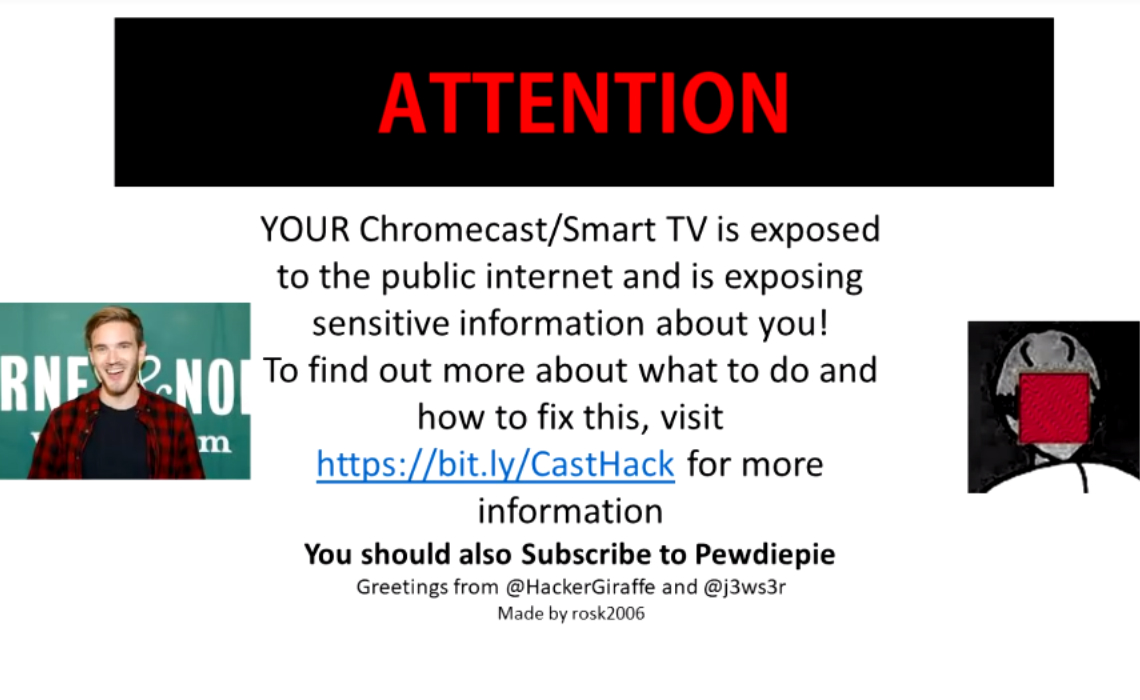
The hacker claims to have hacked Chromecasts, smart televisions and Google Home devices. Going by the name of TheHackerGiraffe on Twitter, the hacker used a “CastHack” that took advantage of users who use incorrectly configured routers that have the Universal Plug ‘n’ Play service enabled.
According to ZDNet, the hacker targeted ports that were exposed to the internet but are usually used by smart TVs, Chromecasts and Google Home for internal management purposes.
Those targeted by the hack were presented with a message that stated “your Chromecast/smart TV is exposed to the public internet and is exposing sensitive information about you!” and “you should also subscribe to PewDiePie.”
The hack also includes a link for users to secure their devices from hacking but actually leads to a YouTube video of Rick Astley singing “Never Gonna Give You Up.”
https://www.youtube.com/watch?v=SBtH_f8nwMQ
“To restrict the ability for external videos to be played on their devices, users can turn off Universal Plug and Play (UPnP),” a spokesperson from Google told Variety. “Please note that turning off UPnP may disable some devices (e.g. printers, game consoles, etc.) that depend on it for local device discovery.”
The exploit used in the attack is not a new one. Security firm Bishopfox first detailing a hack that utilized the same method in 2014.
Whether the previous printer hacks, as well as this new hack, have assisted PewDiePie in his subscription battle against Indian music channel T-Series in unknown. As of tonight, PewDiePie had 79.5 million subscribers, according to a live stream from Social Blade, a clear 1 million subscribers more than rival T-Series.
Support our mission to keep content open and free by engaging with theCUBE community. Join theCUBE’s Alumni Trust Network, where technology leaders connect, share intelligence and create opportunities.
Founded by tech visionaries John Furrier and Dave Vellante, SiliconANGLE Media has built a dynamic ecosystem of industry-leading digital media brands that reach 15+ million elite tech professionals. Our new proprietary theCUBE AI Video Cloud is breaking ground in audience interaction, leveraging theCUBEai.com neural network to help technology companies make data-driven decisions and stay at the forefront of industry conversations.





