 EMERGING TECH
EMERGING TECH
EMERGING TECH







EMERGING TECH

Many assume that serverless computing and functions are a package deal. Functions are serverless; anything serverless must involve functions, right? Actually, no. Google LLC, Red Hat Inc. and others are collaborating on a new open-source project called Knative that democratizes serverless beyond functions.
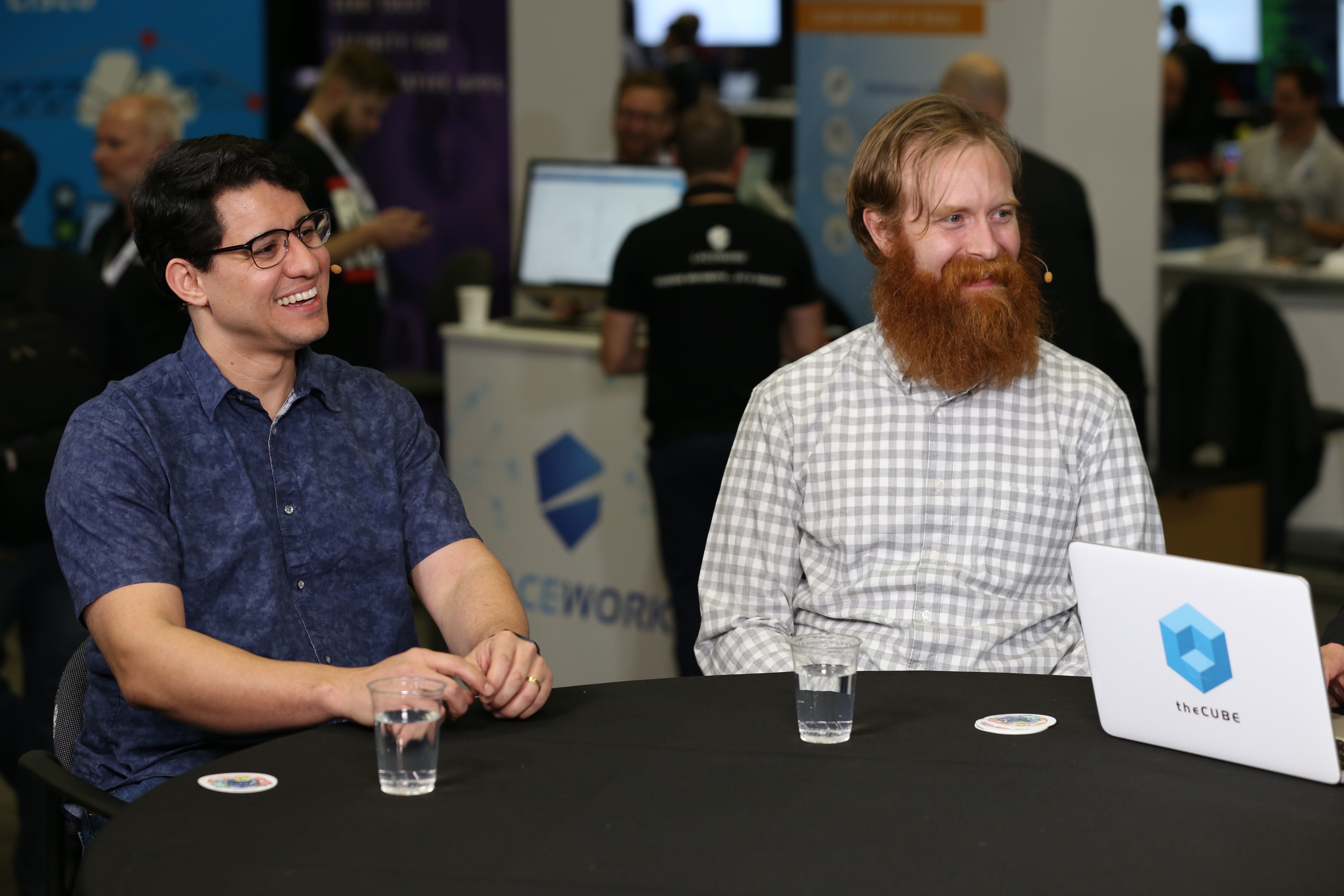
Serverless can be thought of as a kind of user experience, according to William Oliveira (pictured, left), product manager of serverless at Red Hat. It can simplify how developers leverage Kubernetes, the open-source orchestrator for containers (a virtualized method for running distributed applications). Knative extends the serverless user experience to all types of development taking place on Kubernetes.
“It should not be tied too much to functions,” Oliveira said. “Because we can do that for any class of applications running on top of the platform.”
Oliveira and Brian “Redbeard” Harrington (pictured, right), product manager of service mesh at Red Hat, spoke with John Furrier (@furrier) and Stu Miniman (@stu), co-hosts of theCUBE, SiliconANGLE Media’s mobile livestreaming studio, during the KubeCon + CloudNativeCon event in Seattle, Washington. They discussed the Knative project and the evolution of Kubernetes technologies. (* Disclosure below.)
Knative offers three big modules — build, events and serving. Those are the basic capabilities needed to build a serverless platform that can work with any kind of application, not just functions. Serverless abilities can then extend to microservices, monitoring, tracing, observability, etc.
It’s very early days for Knative — it’s in it’s 0.2 release now. “There’s a lot of missing parts around user experience and whatnot, but we are getting there,” Oliveira said.
Red Hat just announced a review of Knative on its OpenShift container platform as an add-on. Knative helps users integrate with different services in the Kubernetes Service Catalog — like the Operator Framework.
“That was part of the thing that was missing to connect the dots when you’re implementing those applications,” Oliveira stated. “How are you going to consume events? How are you going to consume services? How are those applications are going to scale? That’s a lot of what we’re addressing with Knative right now.”
Red Hat has been hard at work in other Kubernetes territories, like the Istio service mesh. “The big thing that’s exciting for me is the forthcoming release of OpenShift 4.0, which gives me the room to shine on the [general availability] release of all the service mesh stuff,” Harrington concluded.
Watch the complete video interview below, and be sure to check out more of SiliconANGLE’s and theCUBE’s coverage of the KubeCon + CloudNativeCon event. (* Disclosure: Red Hat Inc. sponsored this segment of theCUBE. Neither Red Hat nor other sponsors have editorial control over content on theCUBE or SiliconANGLE.)
Support our mission to keep content open and free by engaging with theCUBE community. Join theCUBE’s Alumni Trust Network, where technology leaders connect, share intelligence and create opportunities.
Founded by tech visionaries John Furrier and Dave Vellante, SiliconANGLE Media has built a dynamic ecosystem of industry-leading digital media brands that reach 15+ million elite tech professionals. Our new proprietary theCUBE AI Video Cloud is breaking ground in audience interaction, leveraging theCUBEai.com neural network to help technology companies make data-driven decisions and stay at the forefront of industry conversations.





