 EMERGING TECH
EMERGING TECH
EMERGING TECH






EMERGING TECH

Both Uber Technologies Inc. and Cruise, the autonomous vehicle division of General Motors Co. have open-sourced their visualization software as both attempt to make the technologies a standard.
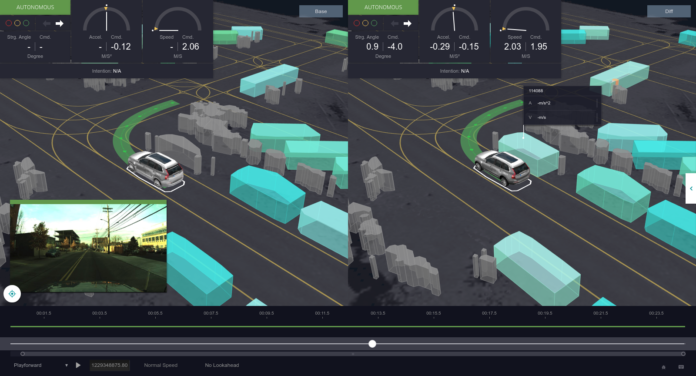
Uber has open-sourced its Autonomous Visualization System, a standard for describing and visualizing autonomous vehicle perception, motion and planning data. It’s claimed to offer a powerful web-based toolkit to build applications for exploring, interacting and making important development decisions with that data.
“As a stand-alone, standardized visualization layer, AVS frees developers from having to build custom visualization software for their autonomous vehicles,” Uber’s engineering team said in a statement. “With AVS abstracting visualization, developers can focus on core autonomy capabilities for drive systems, remote assistance, mapping, and simulation.”
AVS has already found a willing audience as well. Two autonomous vehicle companies, Voyage Auto Inc. and Applied Intuition Inc., pledged to use it.
Cruise has taken a similar path, open sourcing Worldview, a visualization tool that supports 2-D and 3-D cameras, mouse and keyboard movement controls, click interaction and a suite of built-in drawing commands.
Worldview is built on top of WebGL and is described as hiding WebGL’s complexity behind a simple application programming interface, “translating ‘props’ into low-level primitives and simplifying the execution of GPU draw calls .”
As with Uber, Cruise sees the move to open-source the software as a way of finding more users and making it a standard, though it also described its impetus in a more altruistic fashion.
“We hope Worldview will lower the barrier to entry into the powerful world of WebGL, giving web developers a simple foundation and empowering them to build more complex visualizations,” Cruise said on Medium.
The moves came as a surprise given how secretive most companies in the market are.
The Verge described the move as an “unprecedented step in the world of closely guarded self-driving secrets,” though that it’s not: Tesla Inc. started releasing code and technology in a similar fashion back in May.
Support our mission to keep content open and free by engaging with theCUBE community. Join theCUBE’s Alumni Trust Network, where technology leaders connect, share intelligence and create opportunities.
Founded by tech visionaries John Furrier and Dave Vellante, SiliconANGLE Media has built a dynamic ecosystem of industry-leading digital media brands that reach 15+ million elite tech professionals. Our new proprietary theCUBE AI Video Cloud is breaking ground in audience interaction, leveraging theCUBEai.com neural network to help technology companies make data-driven decisions and stay at the forefront of industry conversations.





