 CLOUD
CLOUD
CLOUD
CLOUD







CLOUD

Cloud migration is turning software applications into spoiled prima donnas. Before shifting a legacy app to a cloud computing environment, companies must endure a drawn-out, shriek-filled, costly, dress rehearsal. Refactoring and rewriting apps can become a major production. Is there a way to whittle down or eliminate refactoring and still get worthwhile performance in the cloud?
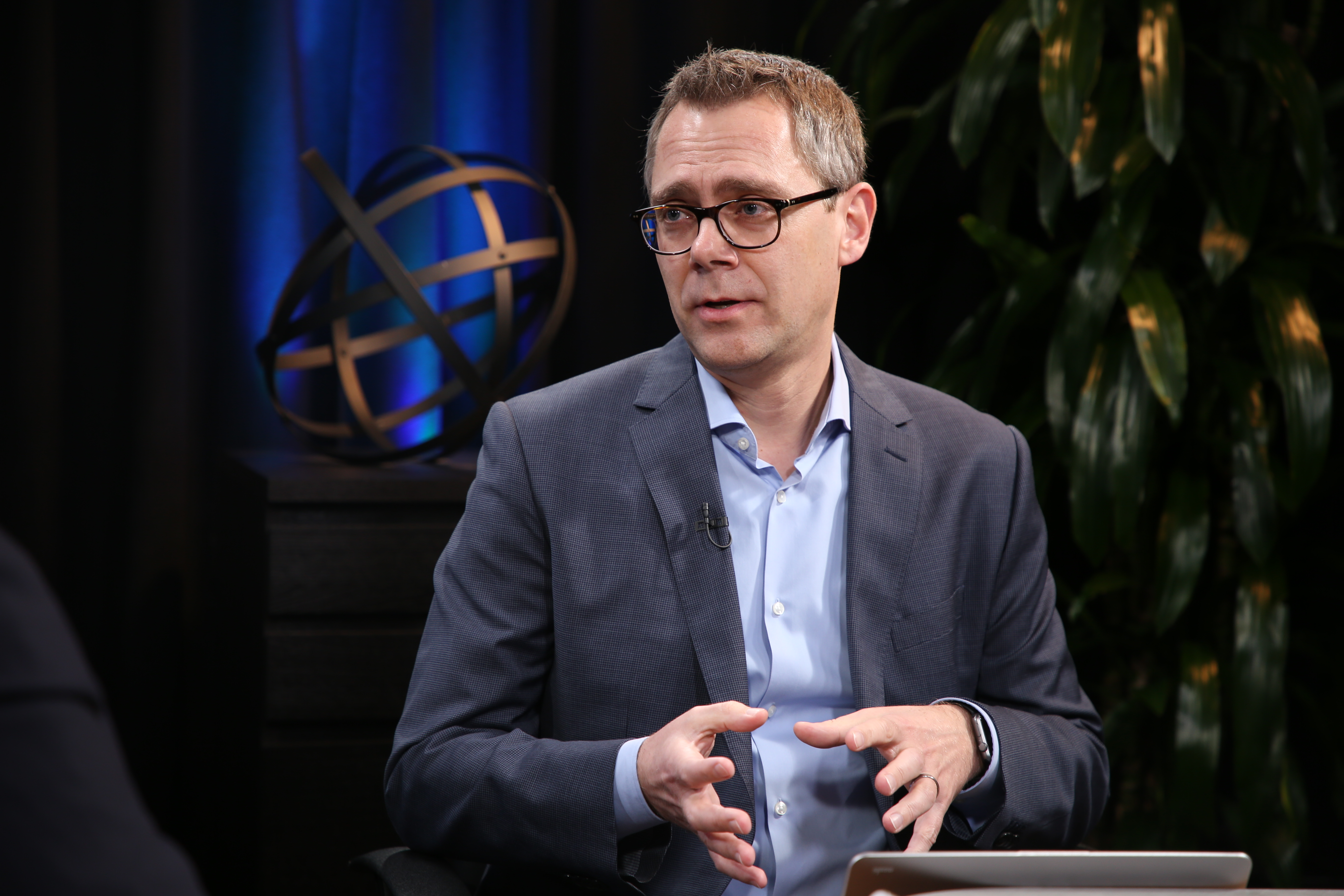
Part of application-refactoring and migration hoopla involves the database. Companies transitioning to cloud often find themselves having to rewrite traditional apps for a new database. Tasks like this can cause migrations to spin into two- to three-year projects with unsatisfactory results, according to Mike Waas (pictured), founder and chief executive officer of Datometry Inc., which offers a database virtualization platform “that liberates databases and data from vendor lock-in and reduces re-platforming to weeks, not years,” according to the company.
“Migration very quickly has that scope creep and turns into a huge furball of all sorts of unmanageable stuff,” Waas said. “And that is why, I believe, Gartner put it at 60 to 70 percent of migrations fail.” What’s more, these applications have been reliable, value-adding assets for 10 or 20 years in some cases. Many companies aren’t in a rush to deconstruct them.
“For them, going to the cloud suddenly poses this huge problem of, ‘Do I really want to rewrite these applications just to end up with something that looks exactly like that in the cloud?'” he added.
The answer to this snafu, according to Waas, is database virtualization. It allows companies to shift an app exactly as is to the cloud without rewriting them for a new database.
Waas sat down with Peter Burris (@plburris), host of theCUBE, SiliconANGLE Media’s mobile livestreaming studio, for a CUBE Conversation at theCUBE’s studio in Palo Alto, California. They discussed how database virtualization can ease app-migration challenges.
This week, theCUBE spotlights Datometry in our Startup of the Week Feature.
The database market is a $40-billion behemoth known for vendor lock-in. Various startups and open-source communities are taking a whack at the user base. The need for a less clunky database that can go where apps are is a pressing concern in multicloud and distributed environments.
Open-source databases like Apache Cassandra are picking up more users lately. DataStax Inc. packages Cassandra in an enterprise-ready version for dispersed information technology systems.
“You’re data needs to be where your customers are,” Patrick McFadin, vice president of developer relations at DataStax, told theCUBE in December. “If you have a website or a mobile application that runs in North America and you have someone in India trying to use it, automatically, you get a half a second of delay. You cannot survive that way. No one’s going to use it there.”
IBM Corp. claims its recent innovation to the database cost-based optimizer is disrupting 40 years of database technology.
“The way people combine their queries, execute their query plans on data, has been the same for 40 years,” Matthias Funke, executive director of hybrid data management offering at IBM, told theCUBE in February. “[IBM’s new technology] has tremendous gains in terms of performance, in terms of simplicity for the users.”
Datometry is tackling the database problem from a unique angle. It is not another database; it is something like “VMware for databases,” Waas said.
A VMware Inc. hypervisor is a virtual machine monitor that creates and runs virtual machines. Datometry’s flagship product, Hyper-Q, is a bit like a logical hypervisor that sits between the applications and the database, according to Waas. Virtualizing the database allows users to get workloads to any cloud quickly without rewriting them, he explained.
“We give IT leaders for the first time that opportunity to actually liberate themselves from the database-vendor lock-in, take their applications the way they are today, written for a particular database — usually one of these legacy data warehouses — take them to the cloud just the way they are without the hassle of rewriting and reinventing their business,” Waas stated. This can get apps to cloud at a fraction of the time, cost and risk involved in refactoring, he said.
Are there some applications that absolutely require a rewrite before relocating to cloud? How many apps are fit to get up and go with no refactoring at all? “It is way more than you actually would think,” Waas said
At first, Waas believed analytics apps for downstream consumers of data would be the best fit. Then he began to see that extract,transform, load apps were also good candidates.
“It turned out that ETL is very often such a … complex, very involved process that moving that wholesale to the cloud, without having to undo it, and then reinvent it, and rewrite it, is just such a godsend for the enterprise,” he said.
In fact, workloads across the entire board are candidates. Moving workloads to cloud quickly is just the short-term benefit of database virtualization, explained Waas. In the long term, there’s a much larger value proposition.
“That’s really about functionality that can be layered on top of this,” he said. “We’re creating a new geography that didn’t exist before. … There’s functionality in the space in between that is much richer than actually a database or the application itself.”
Watch the entire video interview below, and be sure to check out more of SiliconANGLE’s and theCUBE’s CUBE Conversations.
Support our mission to keep content open and free by engaging with theCUBE community. Join theCUBE’s Alumni Trust Network, where technology leaders connect, share intelligence and create opportunities.
Founded by tech visionaries John Furrier and Dave Vellante, SiliconANGLE Media has built a dynamic ecosystem of industry-leading digital media brands that reach 15+ million elite tech professionals. Our new proprietary theCUBE AI Video Cloud is breaking ground in audience interaction, leveraging theCUBEai.com neural network to help technology companies make data-driven decisions and stay at the forefront of industry conversations.





