 CLOUD
CLOUD
CLOUD
CLOUD







CLOUD

In the beginning, there were only personal computers.
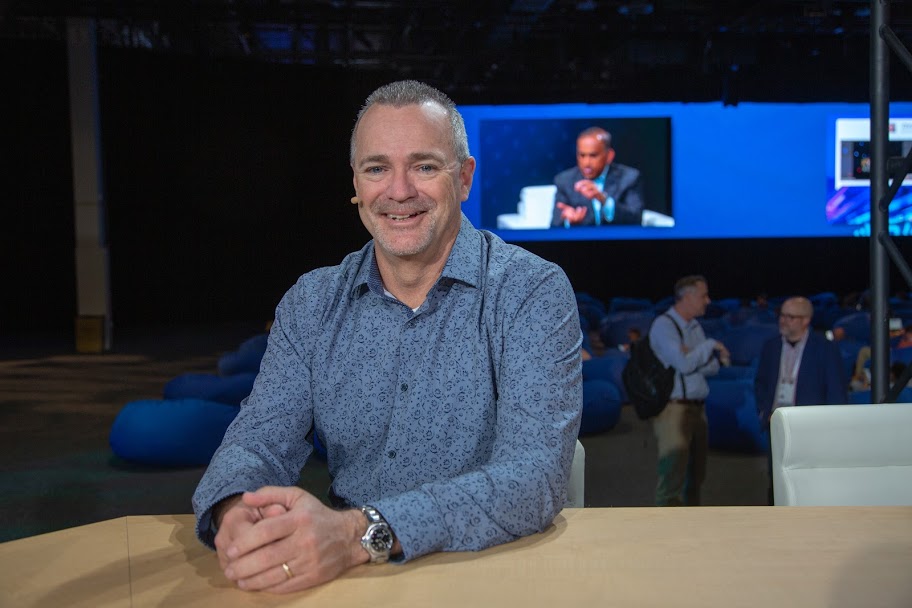
Jeff Clarke (pictured) first became a part of the Dell Inc. empire in 1987 as a quality engineer before it was even called Dell. The company, started by Michael Dell, was known as PC’s Ltd. until 1988 when it was renamed Dell Computer Corp. after its founder.
The PC’s influence is still important today, and even though the company has become a multi-billion-dollar giant in the enterprise infrastructure world known as Dell Technologies Inc., the PC remains an important part of the action.
“Let’s not forget, customers want an end-to-end solution, and one end of that solution is what’s on the edge of the network,” said Clarke, who is now vice chairman of products and operations at Dell Technologies. “The PC is still the primary productivity machine in business. I don’t see that changing.”
Clarke spoke with John Furrier (@furrier) and Dave Vellante (@dvellante), co-hosts of theCUBE, SiliconANGLE Media’s mobile livestreaming studio, during the Dell Tech World event in Las Vegas. They discussed the necessity of bringing VMware Inc. into alignment with Dell and a newly released consumption-based data center management service (see the full interview with transcript here). (* Disclosure below.)
Over his many years at Dell, Clarke transitioned into a number of important roles at the company, including one responsible for leading the Infrastructure Solutions Group. When his company acquired EMC in 2015, the software virtualization business called VMware was part of the deal.
Clarke soon realized he had a problem on his hands.
“We fundamentally weren’t aligned with VMware,” Clarke recalled. “We had a strategy, they had a strategy, and while we both worked for Dell Technologies, we saw the world differently. Michael Dell and I expected us to get that resolved, and we subsequently did.”
By getting on the same page with VMware, Dell has been able to follow the clues offered by its customers for the kind of support they need. This included the launch of an on-premises Cloud Data Center-as-a-Service, an extension of the previously deployed Project Dimension.
“Workloads are migrating back to on-premises,” Clarke explained. “Now, with our Data Center as-a-Service product, we have a cloud operating model that drives consistency and ultimately provides an operational hub from the edge to the private cloud reaching out to the public cloud. We think that’s a pretty compelling proposition to help customers.”
Watch the complete video interview below, and be sure to check out more of SiliconANGLE’s and theCUBE’s coverage of the Dell Tech World 2019 event. (* Disclosure: TheCUBE is a paid media partner for Dell Technologies World. Neither the sponsors of select segments of theCUBE’s event coverage, nor other sponsors have editorial control over content on theCUBE or SiliconANGLE.)
Support our mission to keep content open and free by engaging with theCUBE community. Join theCUBE’s Alumni Trust Network, where technology leaders connect, share intelligence and create opportunities.
Founded by tech visionaries John Furrier and Dave Vellante, SiliconANGLE Media has built a dynamic ecosystem of industry-leading digital media brands that reach 15+ million elite tech professionals. Our new proprietary theCUBE AI Video Cloud is breaking ground in audience interaction, leveraging theCUBEai.com neural network to help technology companies make data-driven decisions and stay at the forefront of industry conversations.





