 INFRA
INFRA
INFRA
INFRA







INFRA

During the hype of a few years back, jumping feet first into public cloud computing seemed like a great idea. After all, everyone was doing it, and no one wanted to miss out. Unfortunately, no matter how cool it may have seemed, blindly following a trend isn’t the best idea. Going all-out for private cloud was a security blunder, and some applications just work better on-premises.
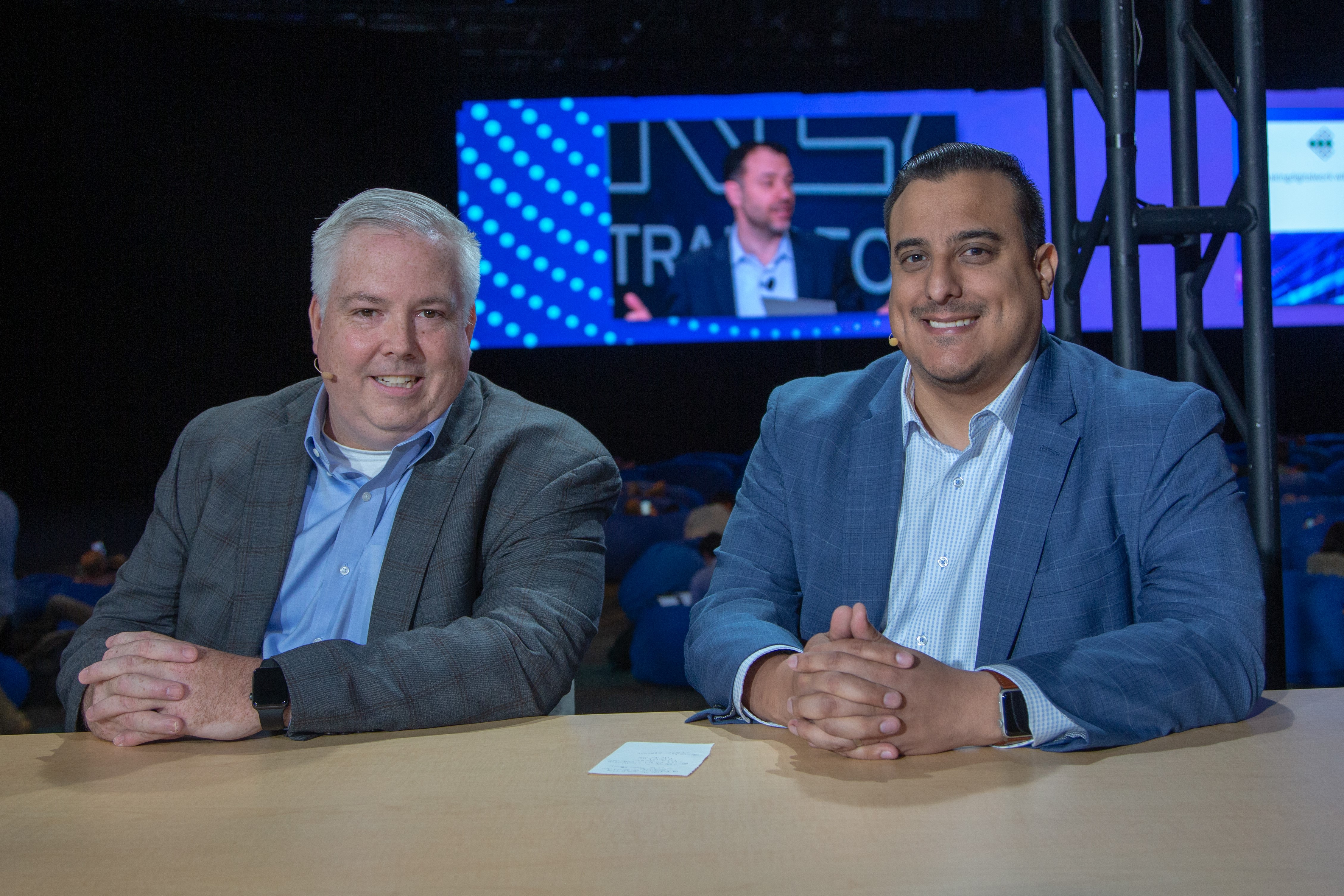
“What we’re seeing is a lot of our clients have thousands if not tens of thousands of applications in a legacy portfolio that simply are not conducive for public cloud,” said Bob Black (pictured, left), Dell Technologies global lead alliance principal at Deloitte LLP.
Repatriating data from public cloud back on-prem may seem like a failure, but it is part of the natural evolution toward a hybrid model, according to Luis Benavides (pictured, right), vice president of cloud business development at Deloitte. “We’re just continuing to move to … the hybrid definition of seamless data and applications across environments,” he said.
Benavides and Black spoke with Dave Vellante (@dvellante) and Lisa Martin (@LisaMartinTV), co-hosts of theCUBE, SiliconANGLE Media’s mobile livestreaming studio, during the Dell Technologies World event in Las Vegas. They discussed the trend toward hybrid cloud adoption and best-case scenarios for repatriation of data (see the full interview with transcript here). (* Disclosure below.)
Public cloud is a “great tool in a tool box,” according to Black. However, “a cohesive hybrid cloud strategy [is] what’s really going to drive value for our clients.”
Enterprise agrees. Ninety-one percent of information technology companies already have hybrid infrastructure. While, in the general marketplace, companies are abandoning pure public cloud strategies. Eighty percent report that they are planning to return half of the workloads they migrated to the cloud back on-prem.
While it may be the best long-term strategy, migrating data back on-prem is complicated and costly. Not wanting to throw good money after bad, clients are looking to companies such as Deloitte for guidance.
Understanding what you have is step one to knowing where to put it, according to Black. “We have clients that have thousands and thousands of applications, and they don’t have the slightest clue of what’s in their portfolio, let alone the attributes that make up those applications,” he said.
While going 100% in on public cloud may not be working out, going back to the data center as it was before migration is no longer an option. The solution is to transform on-prem infrastructure to support a hybrid model.
“What [clients] want is the premise of how you operate cloud, for the way that you do the rest of your legacy applications for IT,” Benavides stated.
Making smart choices requires a holistic view across the entire enterprise portfolio. Look at it not just from the technological side, but take into account organizational change, Benavides advised. “Can you bring in the right talent? Can you retain the right talent? [Do you have] the kind of environment where you can enable them to go create those things that might provide a bigger return in investment to market?” he asked.
And don’t forget to “automate relentlessly where you can in how you approach services,“ he concluded.
Watch the complete video interview below, and be sure to check out more of SiliconANGLE’s and theCUBE’s coverage of the Dell Technologies World 2019 event. (* Disclosure: Dell Technologies Inc. sponsored this segment of theCUBE. Neither Dell nor other sponsors have editorial control over content on theCUBE or SiliconANGLE.)
Support our mission to keep content open and free by engaging with theCUBE community. Join theCUBE’s Alumni Trust Network, where technology leaders connect, share intelligence and create opportunities.
Founded by tech visionaries John Furrier and Dave Vellante, SiliconANGLE Media has built a dynamic ecosystem of industry-leading digital media brands that reach 15+ million elite tech professionals. Our new proprietary theCUBE AI Video Cloud is breaking ground in audience interaction, leveraging theCUBEai.com neural network to help technology companies make data-driven decisions and stay at the forefront of industry conversations.





