 CLOUD
CLOUD
CLOUD
CLOUD







CLOUD

It’s been five busy years in the tech industry since the Kubernetes open-source container-orchestration system was founded, earning crucial contributions from developers to quickly become a de facto standard across all major cloud platform providers. Sharing their perspectives on Kubernetes’ wildly successful ecosystem are some of its earliest contributors, there from the very beginning of the cloud-native computing project.
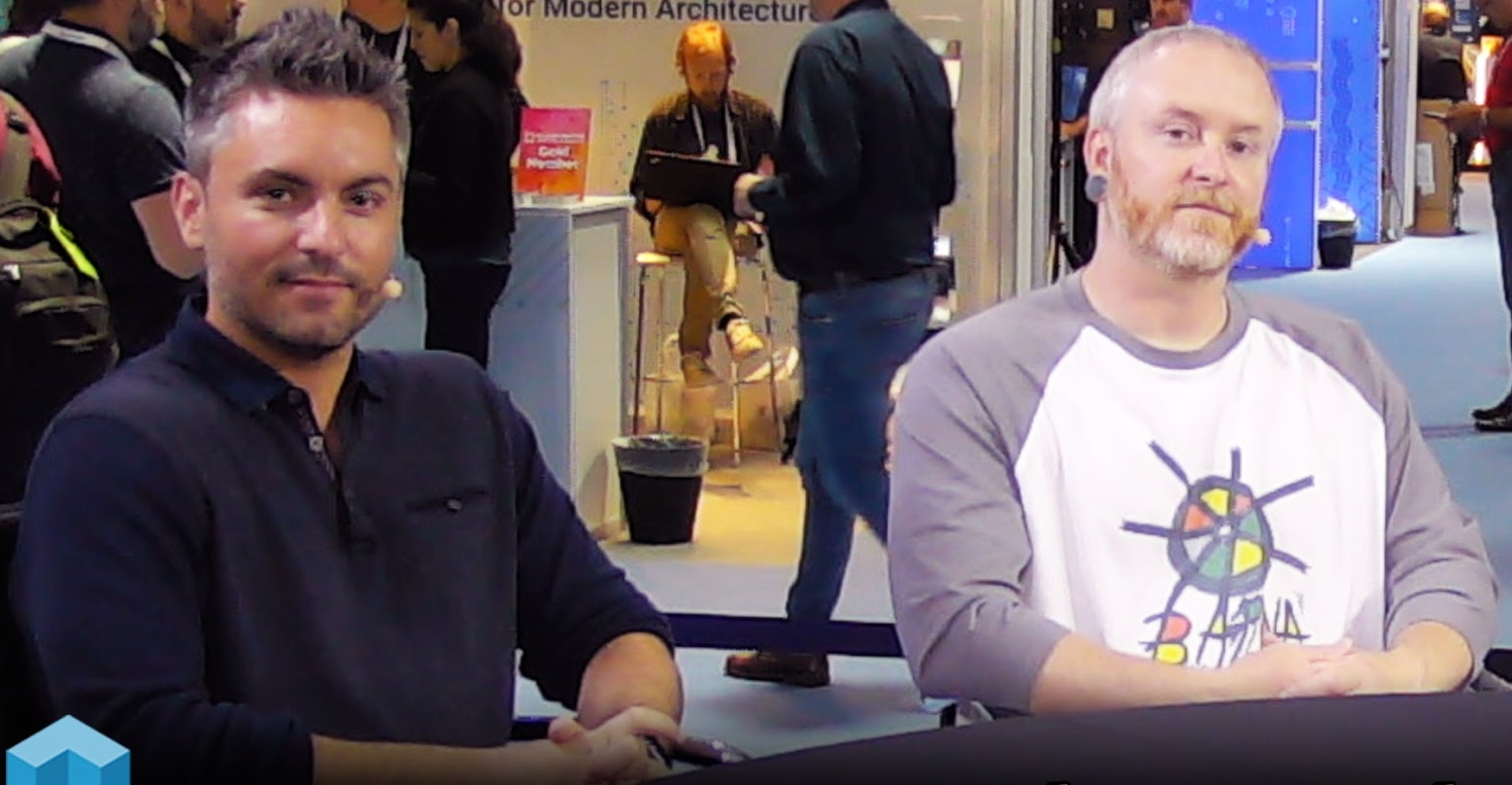
Gabe Monroy (pictured, left), lead project manager, Azure container compute, at Microsoft, and Tim Hockin (pictured, right), principal software engineer at Google, have both contributed to Kubernetes and watched it grow into what it’s become today.
Monroy and Hockin spoke with Stu Miniman (@stu), hosts of theCUBE, SiliconANGLE Media’s mobile livestreaming studio, during the KubeCon + CloudNativeCon event in Barcelona, Spain. They discussed the inception and evolution of Kubernetes (see the full interview with transcript here). (* Disclosure below.)
[Editor’s note: The following has been condensed for clarity.]
Miniman: Kubernetes has in five years had a major impact on what we’re doing. Give us a little bit of your insight as to what you’ve seen from those early days.
Hockin: We would produce these papers that are seminal in the industry, and then we sort of don’t follow up on them sometimes as Google. We didn’t want this to be that, right? We wanted this to be a live, living thing with a real community. So that was very much front of mind as we worked through ‘What are we going to build? How are we going to build it? How are we going to manage it? How are we going to build a community? How do you get people involved?’
Miniman: So Gabe, you were one of those people that got pulled in early. Help give us a little context and your viewpoint there.
Monrov: It was through the process of trying to solve problems for customers … that I was bringing to this, where I was introduced to some really novel technology approaches … and started to work closely with folks at Google, namely Brendan Burns, who I now work with at Microsoft. I’m part of the founding Kubernetes team.
It is really about people. It’s really about individual connections at the end of the day. We do these things at KubeCon events called Contributor Summits. And it’s very interesting, because when folks land at one of these summits, it’s not about who you work for, what jersey you’re wearing, that sort of thing. It’s people talking to people, trying to solve technical problems, trying to solve organizational challenges.
Miniman: So I do talk to people … when they’re involved in the working groups, when they’re doing these things, you think about who their paycheck comes for, but that’s secondary to what they’re doing as part of the community.
Hockin: Absolutely, it’s part of the ethos of the project — that the project comes first and the company comes second or maybe even third. And for the most part, this has been wildly successful. There’s this huge base of trust among the leadership and among the contributors. And it’s a big enough project now that I don’t know every one of the contributors. But we have this web of trust.
And I have this army of people that I know and I trust very well — and they know people, and they know people. And it works out that the project has been wildly successful, and we’ve never yet had a major conflict or strife that’s centered on company this or company that.
Watch the complete video interview below, and be sure to check out more of SiliconANGLE’s and theCUBE’s coverage of the KubeCon + CloudNativeCon event. (* Disclosure: While this segment is unsponsored, Red Hat Inc. is the headline sponsor for theCUBE’s live broadcast at KubeCon + CloudNativeCon. Red Hat nor any other sponsors have editorial control over content on theCUBE or SiliconANGLE.)
Support our mission to keep content open and free by engaging with theCUBE community. Join theCUBE’s Alumni Trust Network, where technology leaders connect, share intelligence and create opportunities.
Founded by tech visionaries John Furrier and Dave Vellante, SiliconANGLE Media has built a dynamic ecosystem of industry-leading digital media brands that reach 15+ million elite tech professionals. Our new proprietary theCUBE AI Video Cloud is breaking ground in audience interaction, leveraging theCUBEai.com neural network to help technology companies make data-driven decisions and stay at the forefront of industry conversations.





