 INFRA
INFRA
INFRA
INFRA







INFRA

What’s a bigger, hairier chore than provisioning a network fit for modern distributed information technology? Perhaps maintaining all its winding, intersecting trafficways day in and day out. This requires a set of all-seeing eyes that spot issues before they cause serious problems.
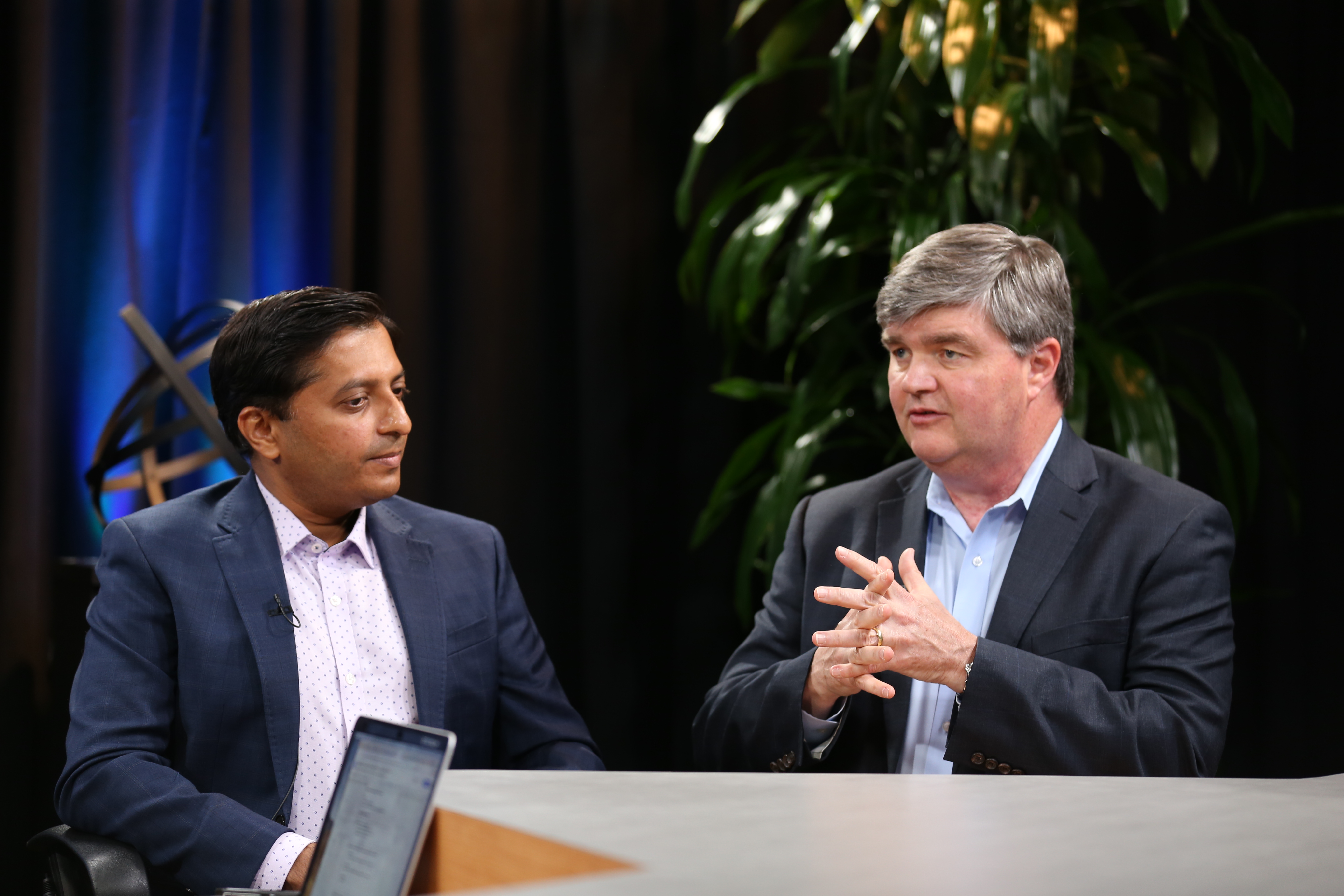
“You can’t use tools that were built 20 years ago to continue operating global networks,” said Dave Link (pictured, right), founder and chief executive officer of ScienceLogic Inc.
Link and Ranga Rao (pictured, left), senior director of product management and solutions engineering at Cisco Systems Inc., spoke with John Furrier (@furrier), host of theCUBE, SiliconANGLE Media’s mobile livestreaming studio, at theCUBE’s studio in Palo Alto, California. They discussed the best technologies for getting messy distributed networks under control (see the full interview with transcript here). (* Disclosure below.)
Older IT tools were made for networks that do not have the same size or number of moving parts. Day-two operations consume 80% of time and 90% of budget in enterprises, according to Rao. The old ways of configuring network switches and such has become inefficient for businesses with complex networks.
The new methods must bring increasing network complexity under control with abstractions, Link added. They should also bring all components together with the instrumentation and analytics to operate them as one system. And, they should cater to modern enterprises’ desire to consume infrastructure as a service.
Abstracting networking configuration and management and surfacing it to the app level has a number of benefits. For one, it offers a single control pane for large systems, according to Rao. Cisco’s Application Centric Infrastructure Fabric offers a controller-based approach for one-stop management.
“Today, we have customers who use 200-plus physical switches being managed by a single point,” Rao stated.
Cisco and ScienceLogic are integrating their platforms through application program interfaces to create a more comprehensive, app-centric hub for network operations. All of the data feeds coming together in that hub would provide a real-time operational view of network health, Link explained.
“Our vision is, you rely less on fault management and more on the proactive analytics side so you understand anomalous behavior and how that could impact your experience as an end user and fix it through automation before there is a problem,” Link concluded.
Watch the complete video interview below, and be sure to check out more of SiliconANGLE’s and theCUBE’s CUBE Conversations. (* Disclosure: ScienceLogic Inc. sponsored this segment of theCUBE. Neither ScienceLogic nor other sponsors have editorial control over content on theCUBE or SiliconANGLE.)
Support our mission to keep content open and free by engaging with theCUBE community. Join theCUBE’s Alumni Trust Network, where technology leaders connect, share intelligence and create opportunities.
Founded by tech visionaries John Furrier and Dave Vellante, SiliconANGLE Media has built a dynamic ecosystem of industry-leading digital media brands that reach 15+ million elite tech professionals. Our new proprietary theCUBE AI Video Cloud is breaking ground in audience interaction, leveraging theCUBEai.com neural network to help technology companies make data-driven decisions and stay at the forefront of industry conversations.





