 EMERGING TECH
EMERGING TECH
EMERGING TECH






EMERGING TECH

Chinese smartphone maker Vivo Communication Technology Co. Ltd. announced its first foray into the augmented reality market today at the Shanghai Mobile World Congress with a reveal of the company’s prototype tethered AR glasses.
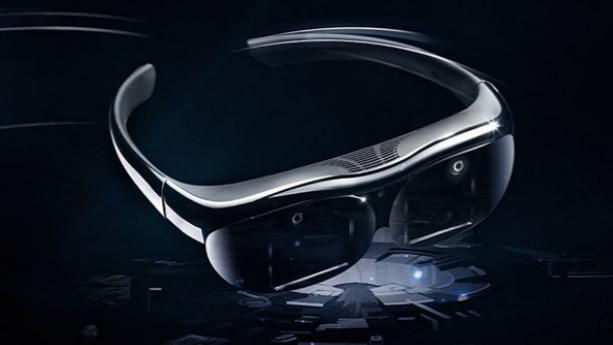
The glasses, called Jovi AR Glass (above), look like a bulky, but stylish, pair of wrap-around sunglasses, are designed to operate by plugging into the company’s to-be-released, 5G-capable smartphone and provide an augmented view for users.
According to the company, the glasses will support professional and productivity apps and entertainment such as watching movies and playing video games. It will also provide real-time information on objects and people in the user’s field of view using the company’s Jovi digital assistant.
The AR glasses will rely on the smartphone as an interface for user interaction. Users will use their tethered smartphone as a controller for gaming or as a keyboard for work applications. According to Spark Ni, senior vice president of Vivo, the release of Jovi AR Glass follows the company’s dedication to smart devices.
“Vivo’s mission has always been to develop innovative products to deliver the ultimate user experience, with smart devices and smart services as the core of our business,” Ni said, adding that he hopes that the company can impact society positively with the addition of these products.
https://www.youtube.com/watch?v=lKcsmgXt1KE
The company also announced an upcoming 5G-capable smartphone to which the AR glasses can tether. The smartphone will officially ship in the third quarter of 2019, but details on the phone, or its capabilities, have yet to be announced.
The Vivo AR Glass features three cameras: two depth sensors and one video camera used for space and object recognition. The connector used to tether the smartphone is a standard Universal Serial Bus type-C connector. With the prototype unveiled at Shanghai MWC, users can use their eyes to select items in their field of view or use the tethered smartphone as a controller.
The AR headset will also feature six-degrees-of-freedom when viewing the world, and a video released with the announcement (above) shows it being used in numerous situations.
With access to the Jovi digital assistant, users will be able to look at objects and people and have them identified, with an overlay appearing near them displaying pertinent information. The glasses could also be used to enhance entertainment by filling a dark room with luminous jellyfish or provide an immersive movie-watching experience. Business users could use the glasses to view interactive models and data.
The Vivo AR Glass is entering into an interesting marketplace for lightweight AR mobile glasses. This is one of the first types seen on the market that is specifically tethered to a smartphone via a cable. Most consumer glasses connect wirelessly or support WiFi connections such as to smart devices.
Also recently launched were the Vuzix Blade AR glasses, a fashionable consumer-friendly pair of AR glasses providing Alexa support. Vuzix Corp. also confirmed a second-generation version of its glasses this week that are smaller and more lightweight. Similarly on the horizon, a report from 2017 hinted that Apple Inc. is working on its own smartphone connected AR glasses that will become available in 2020.
Finally, leaning more heavily toward the enterprise market, Microsoft Corp.’s HoloLens 2 debut in February this year with a developer edition launch priced at $3,500.
Vivo has yet to release any details on the ship date, region availability or pricing on the Vivo AR Glass.
Support our mission to keep content open and free by engaging with theCUBE community. Join theCUBE’s Alumni Trust Network, where technology leaders connect, share intelligence and create opportunities.
Founded by tech visionaries John Furrier and Dave Vellante, SiliconANGLE Media has built a dynamic ecosystem of industry-leading digital media brands that reach 15+ million elite tech professionals. Our new proprietary theCUBE AI Video Cloud is breaking ground in audience interaction, leveraging theCUBEai.com neural network to help technology companies make data-driven decisions and stay at the forefront of industry conversations.





