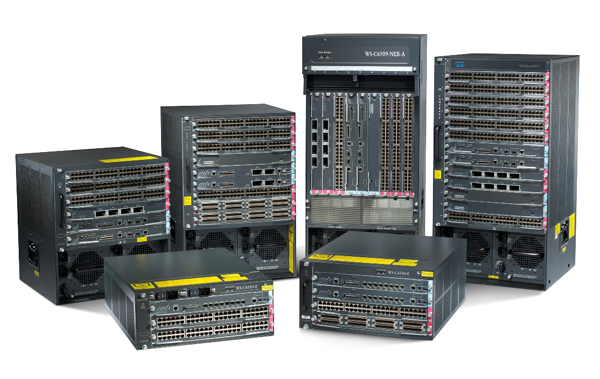







 Cisco said today that it is fending off HP and Juniper in the competitive networking space – a noteworthy admission in a market that faces considerable disruption.
Cisco’s overall switch sales are down 9% compared to a year ago. That in combination with its lackluster consumer business led to restructuring in the company earlier this year.
According to The Street, Cisco is seeing particular competition from HP, which recently launched a “price offensive,” in the switch market.
HP is doing more than going on a price offensive. The company has focused on openness, always a smart idea when you are fighting the leader in the market.
David Donatelli is HP’s executive vice president and general manager for Enterprise Servers, Storage, Networking and Technology Service. He spoke with John Furrier and David Vellante on TheCube earlier this month at HPDiscover about its networking focus.
Juniper and Cisco have been competitors for years. Juniper has in recent years focused on data center transformation. Last year the company launched a “3-2-1” data center network architecture. The intent is to flatten the network, critical when you consider the new demands that comes with virtualization.
As John Oltsik writes for Network World, virtual appliances in combination with virtualization represents a rethinking about data center design:
The story has the potential to be even better with virtualization. Let’s take security for example. Using something like Check Point software blades, I can create virtual firewall instances to support multi-tenancy in the data center. In this way, I can point multiple applications at the same physical firewall and use virtualization to segment network security, enforce Role-based Access Control policies, and meet regulatory compliance mandates. Again, combine this with OpenFlow and you’ve got multi-layer multi-tenancy for cloud computing.
The final possibility here is to go eschew hardware appliances and simply implement L4-7 services as virtual appliances. This gives me the benefits of creating standard images, rapid provisioning, and VM mobility. ESG Research indicates that most enterprises haven’t jumped on the data center virtual appliance bandwagon yet but they are very interested in doing so in the future. As Intel roles out higher-density multi-core services, large organizations will run more VMs on each physical server. As this happens, virtual appliances will certainly become more attractive.
This has significant ramifications for the services market. Network engineers are starting to experiment with virtual appliances but their knowledge is limited. That means the battle between Cisco, HP and Juniper may come down to which company can do the best job in educating its customers, working with them in the field and developing the right integrations.
Support our mission to keep content open and free by engaging with theCUBE community. Join theCUBE’s Alumni Trust Network, where technology leaders connect, share intelligence and create opportunities.
Founded by tech visionaries John Furrier and Dave Vellante, SiliconANGLE Media has built a dynamic ecosystem of industry-leading digital media brands that reach 15+ million elite tech professionals. Our new proprietary theCUBE AI Video Cloud is breaking ground in audience interaction, leveraging theCUBEai.com neural network to help technology companies make data-driven decisions and stay at the forefront of industry conversations.





