







The recession may be technically gone, but it is from forgotten. This is especially true for cash-strapped IT departments whose budgets remain flat. So why consider optimized storage?
Simple. “The recession is still fresh in peoples minds and if you can optimize storage you can save some money,” said Wikibon Chief Analyst Dave Vellante.
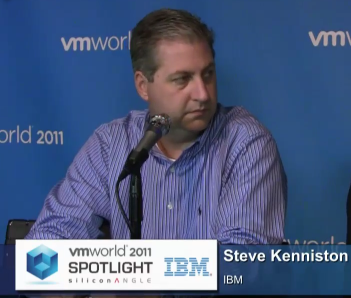
Vellante hosted IBMers Steve Kenniston and Brian Reagan live inside theCube to discuss that state of storage optimization and how it can help IT organizations become more efficient. IBM sponsored the spotlight panel on storage optimization.
Storage optimization is the process of compressing, deduplicating and otherwise manipulating data in order to store it in the most efficient, cost-effective way, while still maintaining the ability to access that data when needed.
Increasingly, customers are demanding real-time access to their stored data, according to Kenniston, Global Storage Efficiency Evangelist at IBM, and for good reason.
“You can’t stress enough this notion of having a real-time platform. Being able to have access to information is one thing. But being able to have access to all of the information that you want in real time is just tremendous,” Kenniston said. “Every piece of data means money.”
IBM is one of two vendors that provide real-time access to stored data. The other is Permabit Alberio. Other players in the optimized storage market include NetApp, EMC and Dell, according to Vellante.
Watch live video from SiliconANGLE.com on Justin.tv
Optimized storage can also lower cloud-based disaster recovery costs, according to Kenniston and Reagan.

Cloud-based data recovery is already less expensive, in many cases, than on-premise offerings because “we’re neutralizing, or minimizing, or almost eliminating the op-ex while perhaps seeing a slight bump in the cap-ex,” said Reagan, who works in IBM’s disaster recovery division.
Adding storage optimization and data compression to the equation and moving data between cloud-based disaster recovery and on-premise storage becomes even less expensive, said Kenniston and Reagan.
Watch live video from SiliconANGLE.com on Justin.tv
Support our mission to keep content open and free by engaging with theCUBE community. Join theCUBE’s Alumni Trust Network, where technology leaders connect, share intelligence and create opportunities.
Founded by tech visionaries John Furrier and Dave Vellante, SiliconANGLE Media has built a dynamic ecosystem of industry-leading digital media brands that reach 15+ million elite tech professionals. Our new proprietary theCUBE AI Video Cloud is breaking ground in audience interaction, leveraging theCUBEai.com neural network to help technology companies make data-driven decisions and stay at the forefront of industry conversations.





