






 Physicists are the social butterflies of the science world. What a concept, huh? And mathematicians are a bit less so. No big surprise there.
I just ran across these findings in a post by Suzanne LaBarre of co.design in which she featured two fantastic data visualizations that shows the underlying connections between research institutions and how scientists share and collaborate on ideas. Moritz Stefaner created the immersive data visualization with Christopher Warnow of onformative studios.
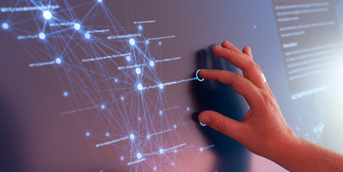
For the project, Stefaner drew on data from his client, MaxPlanck Institutes, a network of 80 research institutions. This map shows the network of institutions and how they related to MaxPlanck external collaborators that include such prestigious institutions as Harvard and the University of California at Berkeley.
Max Planck Research Networks (screencast) from Moritz Stefaner on Vimeo.
According to LaBarre, MaxPlanck commissioned Stefaner, who drew from SciVerse Scopus, a database of more than 94,000 research articles published in the last 10 years, to reveal scientific partnerships around the world.
This work by Stefaner is a testament to how ideas spread and are shared around the world.
LaBarre:
And boy do they flow. You’ve got evolutionary anthropologists working with everyone from psycholinguists and ornithologists to molecular biologists and brain scientists. You’ve got chemists publishing alongside meteorologists. And you’ve got some fierce devotees of unusual subjects: “The University Hawaii seems to be really into extraterrestrial physics,” Stefaner points out. (Likely due to the fact that one of the world’s largest telescopes is in Hawaii, at the Keck Observatory.)
The visualizations are now on display at the MaxPlanck Science Gallery, an exhibition space in Berlin. This one shows how you can use the map to find research institutions and their most important collaborators.
Max Planck Research Networks Prototype from onformative on Vimeo.
The story here is about how ideas are shared and the importance of data services for different forms of collaboration. As big data grows in importance, we increasingly see how necessary it is for scientists from different backgrounds to collaborate. Services will play a critical role in new forms of science collaboration in cancer research, climate change and the any number of issues we face as world populations grow and resources decrease.
Support our mission to keep content open and free by engaging with theCUBE community. Join theCUBE’s Alumni Trust Network, where technology leaders connect, share intelligence and create opportunities.
Founded by tech visionaries John Furrier and Dave Vellante, SiliconANGLE Media has built a dynamic ecosystem of industry-leading digital media brands that reach 15+ million elite tech professionals. Our new proprietary theCUBE AI Video Cloud is breaking ground in audience interaction, leveraging theCUBEai.com neural network to help technology companies make data-driven decisions and stay at the forefront of industry conversations.





