







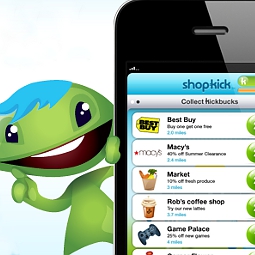
 Startups have been getting a warm reception from the booming mobile industry. The wide consumer base of mobility has plenty of room to explore, with mobile shopping presenting one of the most promising avenues. This is where Shopkick, a global leader in location-based shopping, has gained momentum in 2011.
Cyriac Roeding, CEO of shopkick shares how the last holiday season greatly contributed to the spike in engagement:
“The Holiday season went even better for shopkick than we had hoped for, and the kick continued through January. Shopkick is the largest location-based shopping app in the country, and for this year we have a lot of a plans that we are very excited about. On to a great 2012!”
The company reported a milestone of 3 million active users, just one year after launch. The lucky streak continues with around 1 billion in-app deals and offers viewed, and 5 million walk-ins to partner stores as of December of last year. By the end of the 2011, they recorded 10 million product scans—a significant increase from 7 million in Augusta and 3 million in February. The holiday season spelled joy to shopkick as they pitched in a daily average of 3.1 million interactions.
 The numbers also revealed that Shopkick’s consumer base is predominantly female, around 64 percent. More than half of this population has kids. This says a lot about the convenience of viewing digital content and coming up with a decision before walking-in a store. Saves plenty of time, indeed. The average age of a Shopkick user is 30, and only 8% are younger than 18.
The launch of retailing via partnership with Old Navy sparked the fire for Shopkick in November 2011. From then on until the last day of the year, they documented around 150 million interactions. At present, the deployment of Shopkick technology has invaded more than 4,000 retailers and 250 large malls in the United States.
The retailing industry has grown exponentially since the emergence of mobile shopping, together with mobile payments. Brands have ventured in targeting local consumerism via retail to augment their sales. Earlier we reported on how retailers are able to attract customers with web-based experience, coupled with tangibility of products via “mashops.” This new technology allows customers to virtually fit clothes and accessories without the actual sweating and fitting, thanks to interactive displays. Another Cisco report supported the trend, noting how consumers are now turning into digital content before deciding to purchase an item.
This trend of the shopping experience shifting online and mobile shows no signs of slowing down. With couch potato shoppers growing in numbers, it looks like we are going to see more apps that will take advantage of the trend.
Support our mission to keep content open and free by engaging with theCUBE community. Join theCUBE’s Alumni Trust Network, where technology leaders connect, share intelligence and create opportunities.
Founded by tech visionaries John Furrier and Dave Vellante, SiliconANGLE Media has built a dynamic ecosystem of industry-leading digital media brands that reach 15+ million elite tech professionals. Our new proprietary theCUBE AI Video Cloud is breaking ground in audience interaction, leveraging theCUBEai.com neural network to help technology companies make data-driven decisions and stay at the forefront of industry conversations.




