







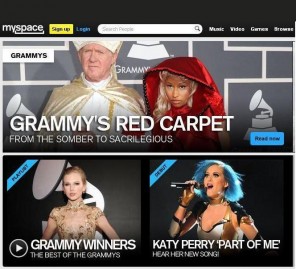
 Former social networking titan Myspace is making a comeback. Looking back, they used to be the crème de la crème in social networking until Facebook rose to dominance, sweeping the whole world off its feet. While outperforming Facebook may seem impossible now, all hope’s not lost for MySpace. Instead of trying to compete with something so invulnerable and impregnable, they are shifting sights to an industry that doesn’t require them to fight such a desperate battle—and that turned out to be the music industry.
In retrospect, Justin Timberlake and a number of investors bought Myspace for $35 million from News Corps last June. It seemed like a pretty good deal considering New Corps originally bought Myspace for $580 million in 2005. Of course, ever present skeptics were ready with criticisms. For now the move seems to have paid off, as Myspace added 1 million new users over the past month.
“The numbers tell an amazing story of strong momentum and dramatic change for Myspace,” said Tim Vanderhook, CEO of Myspace. “And the 1 million-plus new user accounts we’ve seen in the last 30 days validates our approach.”
 The new tactics tap into an early demographic for MySpace, leveraging their existing platform for posting and listening to music. Yesterday, they launched a new music player that has access to the web’s biggest catalogue of music, boasting 42 million songs–that’s more than Spotify.
“Myspace is building meaningful social entertainment experience around content, where consumers can share and discover the music they love,” Vanderhook said. “Consumers are getting excited about Myspace again — a testament to a great music product.”
Big data turns music into a market
Big data plays a major role in the area of music. The music industry has taken advantage of new big data tools to understand its customers, and this is a concept Myspace seems to understand very well.
From the Economist: “Every time a track is uploaded to or played on YouTube, every time it is sold by iTunes, streamed on Spotify, shared on a pirate network, liked on Facebook or tweeted about, it gives off a digital signal. A cottage industry has sprung up to process these signals and feed the results to the record companies.
‘We’re no longer just a wholesaler of music,” says Paul Smernicki of Universal. As their traditional business declines, the music companies are moving into live music and merchandise. To succeed in those markets, they will need to become experts in fan behaviour, understanding not just how and why people buy music but how they weave it into their lives. In that, data will be crucial.’”
Support our mission to keep content open and free by engaging with theCUBE community. Join theCUBE’s Alumni Trust Network, where technology leaders connect, share intelligence and create opportunities.
Founded by tech visionaries John Furrier and Dave Vellante, SiliconANGLE Media has built a dynamic ecosystem of industry-leading digital media brands that reach 15+ million elite tech professionals. Our new proprietary theCUBE AI Video Cloud is breaking ground in audience interaction, leveraging theCUBEai.com neural network to help technology companies make data-driven decisions and stay at the forefront of industry conversations.




